TL;DR This article examines how cutting-edge technology is fundamentally transforming aviation safety, especially in demanding environments characterized by complex topography and unpredictable weather. We explore advancements in navigation, sensor integration, predictive maintenance, and communication that collectively enhance flight safety and resilience in rugged landscapes, aiming to prevent incidents and improve operational reliability.
Introduction
The allure of breathtaking natural landscapes often involves traversing challenging terrains, and for many, aerial tours offer unparalleled perspectives. However, such operations, particularly in regions like Kauai with its dramatic cliffs, deep valleys, and rapidly changing microclimates, inherently carry elevated risks. While human skill and rigorous training remain paramount, technology plays an increasingly critical role in augmenting safety, providing pilots with unprecedented levels of awareness and support. This piece delves into the engineering innovations that are making aerial operations safer in some of the world's most formidable environments.
The Challenge of Complex Terrain
Flying in rugged landscapes presents a unique set of hazards. Pilots contend with rapidly changing weather patterns, strong winds, downdrafts, and updrafts influenced by topography, and the ever-present risk of controlled flight into terrain (CFIT). Visual flight rules (VFR) can be quickly compromised by sudden fog or cloud cover, reducing visibility to near zero. Furthermore, the lack of extensive ground infrastructure can complicate communication and emergency response. These factors necessitate robust technological safeguards that go beyond standard aviation protocols.
Advanced Avionics and Navigation Systems
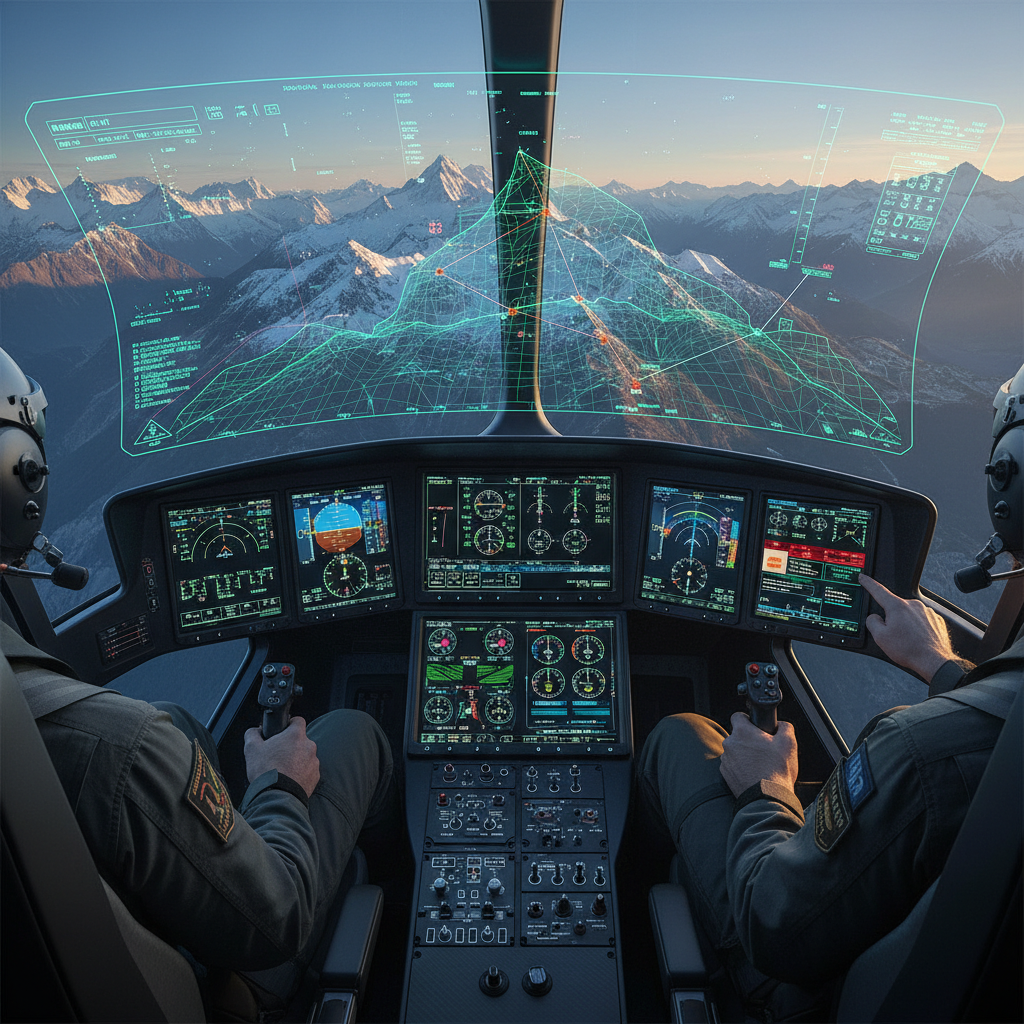
The heart of modern aerial safety in complex environments lies within advanced avionics. Enhanced Ground Proximity Warning Systems (EGPWS) and Terrain Awareness Warning Systems (TAWS) are crucial, providing pilots with timely audio and visual alerts about potential terrain conflicts. These systems use a digital terrain database, GPS position, and aircraft altitude to predict potential collisions and advise evasive action.
Beyond warnings, Synthetic Vision Systems (SVS) and Enhanced Vision Systems (EVS) are revolutionizing cockpit displays. SVS creates a realistic, 3D depiction of the outside world on the cockpit screen, even in zero visibility, by rendering terrain, obstacles, and runways from onboard databases. EVS, using infrared cameras, allows pilots to 'see' through fog, haze, and darkness, displaying real-time external imagery on the cockpit display. Together, these systems significantly improve situational awareness and reduce workload, especially when visual references are limited.
Sensor Fusion and Data Integration
The ability to integrate and interpret data from multiple sources is a cornerstone of modern aviation safety. Sensor fusion combines inputs from GPS, inertial navigation systems (INS), altimeters, weather radar, engine performance monitors, and flight control systems into a single, coherent operational picture. This integrated data stream provides a comprehensive understanding of the aircraft's state, its environment, and potential threats.
Real-time data streaming is another critical advancement. Modern aircraft can transmit vast amounts of operational data to ground stations, allowing for continuous monitoring of flight parameters, system health, and environmental conditions. This not only aids in immediate decision-making but also contributes to a rich dataset for post-flight analysis and safety improvements. The aggregation of this data helps identify anomalies and trends that might indicate emerging risks before they escalate into incidents.
Predictive Maintenance and Health Monitoring
Just as crucial as in-flight systems is the proactive management of aircraft health. Predictive maintenance leverages operational data to anticipate component wear and potential failures. By continuously monitoring engine parameters, vibration levels, fluid analysis, and other sensor data, maintenance teams can identify components nearing their operational limits long before they fail. This shift from reactive to proactive maintenance significantly enhances reliability and reduces the likelihood of mechanical issues contributing to an incident.
Integrated Vehicle Health Management (IVHM) systems are at the forefront of this trend. These systems use a network of sensors throughout the aircraft to collect real-time data on the condition of critical components. Sophisticated algorithms then analyze this data to provide early warnings of potential malfunctions, allowing for scheduled interventions rather than emergency repairs. This data-driven approach minimizes downtime and maximizes safety by ensuring aircraft are always in optimal condition.
Communication and Tracking Systems
Reliable communication and precise tracking are vital, particularly in remote or challenging areas. Satellite-based communication systems ensure continuous contact between aircraft and air traffic control or operational centers, regardless of terrestrial infrastructure. This capability is invaluable for real-time updates on weather, flight plan deviations, and emergency declarations.
Advanced tracking systems, often leveraging satellite constellations, provide highly accurate, real-time positioning data. This not only enhances air traffic management but also drastically improves the efficiency and success rate of search and rescue operations in the event of an incident. Knowing the precise last known location of an aircraft can shave critical hours off response times, which can be life-saving in remote, rugged environments.
The Path Forward
The continuous evolution of technology promises even greater strides in aviation safety. Future developments may include more sophisticated AI-driven decision support systems for pilots, enhanced autonomous flight capabilities for emergency situations, and even more integrated global surveillance systems. The goal is to create an increasingly resilient and robust aviation ecosystem where human ingenuity is powerfully augmented by technological precision.
Conclusion
While the inherent beauty and challenge of flying in rugged landscapes will always demand exceptional pilot skill, the role of technology in mitigating risks cannot be overstated. From advanced navigation and terrain awareness systems to sophisticated sensor fusion, predictive maintenance, and robust communication, engineering innovations are continuously pushing the boundaries of what's possible in aviation safety. These tools empower pilots, enhance situational awareness, and build an aerospace infrastructure that is increasingly resilient against the unpredictable forces of nature, ensuring safer journeys for all.