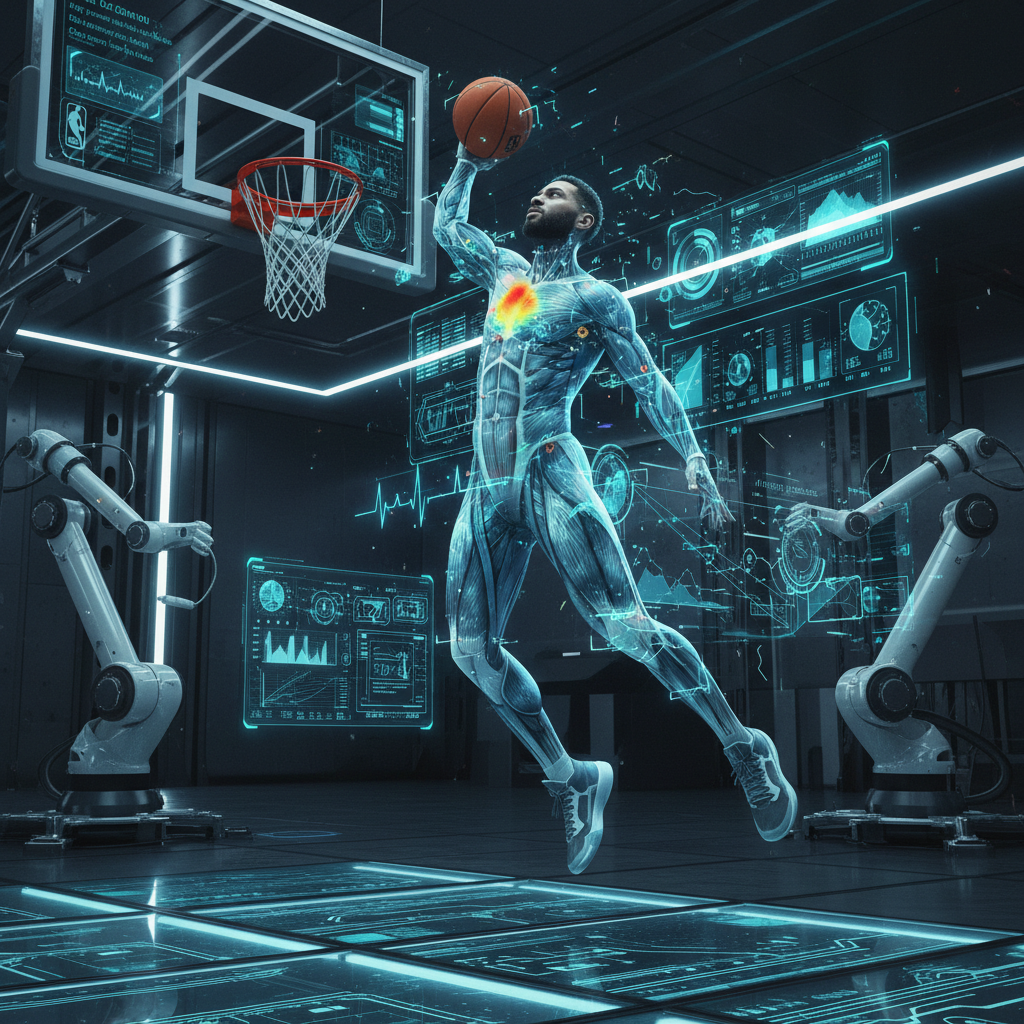
TL;DR: Elite athletes like Kawhi Leonard benefit from sophisticated load management systems. These systems leverage advanced sensors, biomechanical analysis, and predictive analytics to monitor physiological stress, optimize training, and prevent injuries, extending careers and enhancing performance through a proactive, engineering-driven approach to human resilience.
The Engineering of Endurance: A New Era in Athlete Care
In the high-stakes world of professional sports, an athlete's body is their most valuable asset. For stars like Kawhi Leonard, whose career has been punctuated by strategic periods of 'load management,' this isn't just about taking a day off. It's a testament to a profound paradigm shift in athlete care, moving from reactive injury treatment to proactive, data-driven performance optimization. This evolution is powered by a confluence of advanced engineering principles, cutting-edge sensor technology, and sophisticated analytical frameworks, treating the human body as a complex system to be meticulously monitored and optimized.
From Reactive to Proactive: A Paradigm Shift
Historically, athlete care largely focused on rehabilitation after an injury occurred. Today, the focus has shifted dramatically towards prevention, prediction, and personalized intervention. This transition is less about intuition and more about instrumentation. Engineering plays a critical role in developing the tools and systems that allow teams to quantify physiological stress, biomechanical efficiency, and recovery status with unprecedented precision. The goal is to identify and mitigate risks before they manifest as injuries, thereby extending careers and maintaining peak performance levels.
The Data Stream: Sensors and Biometric Monitoring
The foundation of effective load management is robust data collection. Modern athletes are essentially mobile data hubs, equipped with an array of sensors that continuously stream vital information. These include:
- Wearable GPS and Accelerometers: Devices embedded in vests or worn on limbs track movement patterns, distance covered, acceleration/deceleration, and ground reaction forces during practices and games. Engineers design these sensors for durability, accuracy, and minimal interference with athletic movement.
- Heart Rate Variability (HRV) Monitors: Often integrated into smartwatches or chest straps, HRV provides insights into the autonomic nervous system's response to stress and recovery. A declining HRV can signal accumulating fatigue or impending illness, prompting adjustments in training load.
- Sleep Trackers: High-performance athletes understand the critical role of sleep in recovery. Wearable and non-wearable sleep monitors track duration, sleep stages, and disturbances, providing data that informs personalized recovery protocols.
- Smart Apparel: Emerging technologies include textiles embedded with sensors that can measure muscle activation, skin temperature, and even hydration levels, offering a more granular view of physiological responses during exertion.
- Laboratory Diagnostics: Beyond wearables, regular blood and urine tests provide biomarkers for inflammation, hormone levels, hydration status, and nutritional deficiencies, adding another layer of data for comprehensive athlete profiling.
The engineering challenge here lies in integrating these disparate data sources into a cohesive, reliable stream, ensuring data integrity, and developing algorithms to filter noise from meaningful signals in real-time.
Beyond Raw Data: Predictive Analytics and Machine Learning
Collecting data is only the first step. The true power of modern load management lies in how this data is processed and interpreted. This is where advanced analytics and machine learning (ML) models come into play. Engineers and data scientists develop sophisticated algorithms that:
- Identify Fatigue Markers: By analyzing trends in movement efficiency, power output, HRV, and sleep quality, ML models can detect subtle signs of accumulating fatigue that might otherwise go unnoticed.
- Predict Injury Risk: These models can correlate specific training loads, movement patterns, and physiological responses with historical injury data to predict an athlete's susceptibility to certain injuries. For instance, a sudden spike in high-intensity sprints combined with poor sleep and low HRV might flag an increased risk of soft tissue injury.
- Optimize Training Volume and Intensity: Predictive models help coaches and trainers fine-tune daily and weekly training plans, ensuring athletes are challenged sufficiently to adapt and improve without crossing the threshold into overtraining or injury risk.
The engineering effort behind these systems involves building robust data pipelines, selecting and training appropriate ML models, and creating intuitive dashboards that present complex insights in an actionable format for medical staff and coaching teams.
Biomechanics in Action: Refining Movement Efficiency
Beyond internal physiological monitoring, external biomechanical analysis is crucial. High-speed cameras, motion capture systems (both optical and inertial), and force plates are used to analyze an athlete's movement patterns with exquisite detail. This allows engineers and biomechanists to:
- Identify Movement Asymmetries: Detect imbalances or compensatory movements that could lead to injury over time.
- Optimize Technique: Refine shooting forms, running gaits, jumping mechanics, and landing strategies to maximize efficiency and reduce undue stress on joints and muscles.
- Measure Ground Reaction Forces: Quantify the forces an athlete exerts on and absorbs from the ground, critical for understanding impact stress and power generation.
This data is often rendered in 3D models, allowing for precise angular and velocity measurements, providing objective insights that complement subjective coaching observations. The software engineering required to process this vast amount of spatial and temporal data into meaningful biomechanical insights is immense.
Personalized Protocols: The Feedback Loop
All this data and analysis culminates in highly personalized training and recovery protocols. Instead of a one-size-fits-all approach, each athlete receives a tailored plan that dynamically adjusts based on their real-time physiological and biomechanical data. This includes:
- Dynamic Training Adjustments: Modifying practice intensity, duration, or specific drills based on readiness scores.
- Targeted Recovery Strategies: Prescribing specific recovery modalities like cryotherapy, contrast baths, personalized nutrition plans, or active recovery sessions.
- Strength and Conditioning: Customizing resistance training to address identified weaknesses or imbalances.
Software platforms act as the central nervous system for this feedback loop, integrating data from various sources and presenting recommendations to coaches, medical teams, and the athletes themselves.
The Engineering Challenge: Integration and Scalability
The true complexity of elite load management systems lies in their engineering architecture. Integrating dozens of different hardware sensors, software platforms, and analytical models from various vendors presents significant challenges. Data consistency, latency, security, and scalability are paramount. Engineers must design systems that can:
- Handle massive volumes of real-time data.
- Ensure data privacy and compliance with regulations.
- Provide robust, fault-tolerant operation.
- Offer intuitive user interfaces for non-technical staff.
The Future of Human Performance Engineering
As technology advances, so too will the sophistication of athlete load management. We can anticipate the rise of 'digital twins' – virtual replicas of athletes that simulate the impact of different training regimens or recovery strategies. Real-time biofeedback systems, even more advanced predictive AI, and seamless integration of environmental factors will further refine this engineering discipline. The goal remains constant: to push the boundaries of human performance while safeguarding the athlete's long-term health and career.
Conclusion
Kawhi Leonard's strategic approach to his career is a vivid illustration of how engineering and data science are transforming elite sports. Load management is far more than just resting; it's a meticulously engineered process of monitoring, analyzing, and optimizing the human machine. By embracing these technological advancements, teams and athletes are not just playing the game; they are redefining the very science of athletic resilience and longevity.