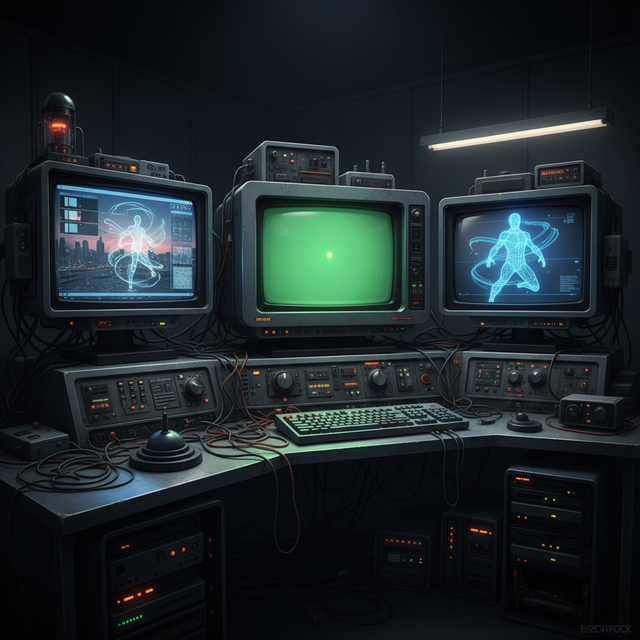
TL;DR This article examines the engineering challenges and solutions in visual effects (VFX) for long-running television dramas in the early 2000s. We'll explore the blend of practical and digital effects, the software and hardware limitations, and the innovative pipelines developed to deliver consistent, high-quality visual storytelling on a weekly schedule, using a prominent superhero series of that era as a prime example of pushing boundaries.
The Dawn of Digital Illusions on the Small Screen
In the early 2000s, television was undergoing a quiet revolution. While feature films had already embraced the grandeur of digital visual effects, TV productions faced a unique set of constraints: tighter budgets, compressed timelines, and the relentless demand for weekly content. Yet, it was during this period that many long-running dramas began to regularly feature complex visual effects, pushing the boundaries of what was thought possible for the medium. Bringing fantastical elements, from alien worlds to superhuman abilities, to life required not just artistic vision, but significant engineering prowess.
Consider the challenge of depicting consistent, believable superpowers week after week for a show that ran for over a decade. This wasn't merely about creating a single impressive shot; it was about developing repeatable, scalable, and efficient workflows that could integrate seamlessly into a fast-paced production pipeline. The engineering solutions developed during this era laid much of the groundwork for the sophisticated VFX we see in television today.
The Technological Landscape of Early 2000s VFX
The early 2000s stood at an interesting crossroads for visual effects technology. While powerful rendering farms and advanced compositing software were becoming standard in film, television often had to make do with more modest setups. Graphics workstations were powerful but expensive, and render times for complex 3D scenes could still stretch into hours or even days per frame, making it a luxury for a TV schedule.
Software suites like Discreet Logic's Inferno/Flame, Alias Wavefront's Maya, and Adobe After Effects were central to the toolkit. However, their integration and optimization for a rapid TV turnaround were key. Teams often developed custom scripts and plugins to automate repetitive tasks, streamline data transfer between different applications, and manage asset libraries efficiently. This bespoke software development was critical for maintaining consistency and speed.
Hardware was also a significant bottleneck. Processing power for real-time previews was limited, meaning artists often worked with proxies and low-resolution assets, only seeing the final render much later. Storage solutions, while evolving, still posed challenges for managing the vast amounts of raw footage, rendered layers, and final composites generated over a season. Network infrastructure within studios had to be robust enough to handle large file transfers and collaborative workflows.
Engineering the Impossible: Techniques and Workflows
Bringing superpowers to life on a weekly basis involved a sophisticated blend of practical and digital effects. The engineering challenge was to seamlessly integrate these disparate elements.
Green Screen and Compositing Pipelines
Green screen technology was fundamental. Actors would perform actions against a chroma key backdrop, and these plates would then be digitally composited with computer-generated environments or effects. The engineering behind this involved precise color keying algorithms, spill suppression techniques, and sophisticated tracking software to match camera movements between the live-action plate and the digital background. Ensuring consistent lighting and perspective across multiple shots and episodes was a continuous technical hurdle.
Wire Work and Rig Removal
For flying or enhanced agility sequences, actors were often suspended by wires. The engineering here wasn't just in the physical rigging, which was an art in itself, but in the digital removal of these wires. This required meticulous rotoscoping – manually tracing outlines frame by frame – and sophisticated paint tools to reconstruct the background behind the removed wires. This process was incredibly labor-intensive and demanded efficient software tools and skilled artists.
Early CGI and Particle Systems
While full CGI characters were rare due to budget and time, elements like energy blasts, speed effects, and environmental augmentations were increasingly rendered in 3D. Particle systems, which simulate phenomena like smoke, fire, and dust, became crucial. Engineers and technical directors developed custom particle presets and simulation workflows to create consistent and believable effects that could be quickly adapted for different scenarios.
Data Management and Version Control
Perhaps less glamorous but equally critical was the engineering of data management. With hundreds, sometimes thousands, of VFX shots per season, keeping track of different versions, approvals, and dependencies was a monumental task. Custom asset management systems, often built on top of existing database solutions, were essential for ensuring that the correct assets were used, changes were tracked, and final renders were delivered on time. This mirrored software development practices, emphasizing version control and robust project management.
The Iterative Nature of TV VFX Production
Unlike film, where VFX often has a dedicated, longer post-production window, TV required an iterative, almost agile approach. Episodes were often being shot, edited, and had VFX applied concurrently. This meant that VFX teams had to develop highly efficient pipelines that allowed for quick turnarounds and frequent revisions. This 'just-in-time' engineering demanded flexible tools and a highly collaborative environment between directors, editors, and VFX artists.
The challenge extended to maintaining visual continuity over many years. As software and hardware evolved, and as new artists joined, ensuring that a character's powers or a recurring location looked consistent across seasons required rigorous documentation, asset libraries, and often, custom tools to port older assets to newer software versions without breaking their appearance.
Legacy and Future Impact
The engineering ingenuity displayed in early 2000s television VFX, particularly in long-running series, had a profound impact. It demonstrated that complex visual storytelling was not solely the domain of blockbuster films. It forced the development of more efficient workflows, more robust software integrations, and a greater emphasis on practical solutions combined with digital enhancements.
These foundational efforts paved the way for the explosion of high-quality VFX in modern streaming series and prestige television. The lessons learned in managing large-scale, iterative VFX pipelines under pressure are directly applicable to today's demanding production environments. The engineers and artists of that era, often working with fewer resources, truly crafted the impossible, building the digital tools and processes that continue to evolve and inspire.
Conclusion
The journey of visual effects in early 2000s television was a testament to human ingenuity and engineering problem-solving. Faced with significant technical constraints and an insatiable demand for content, teams developed innovative software, hardware workflows, and creative methodologies that brought fantastical narratives to life. This era, exemplified by shows that consistently delivered on the promise of extraordinary abilities, serves as a powerful reminder of how engineering principles are applied to art, pushing the boundaries of what stories can be told on screen and setting the stage for the digital spectacles we now take for granted.