TL;DR
- Your 'Anthony Starr' project is your differentiator: It's the core system embodying your unique value proposition, making it a poor fit for generic, off-the-shelf solutions.
- Off-the-shelf tools have limits: While tempting for speed, they often lack the flexibility, scalability, and specific features needed to support complex, evolving business logic.
- Custom build provides true competitive advantage: It offers precise control over features, performance, integration, and future adaptability, directly aligning with your strategic goals.
- Strategic planning is paramount: A custom build requires thorough discovery, robust architectural design (e.g., microservices), iterative development, and a clear understanding of total cost of ownership.
- Mitigate risk with experienced partners: Leverage expertise in modular design, agile methodologies, and cloud-native practices to ensure a successful, scalable, and maintainable platform.
The 'Anthony Starr' Project: When Off-the-Shelf Just Won't Cut It
Every startup founder faces a critical juncture: do we buy an existing tool, or do we build a custom solution? For many foundational operational tasks – email, CRM, project management – off-the-shelf (OTS) software is a no-brainer. It's fast, relatively inexpensive upfront, and gets the job done.
But what about your 'Anthony Starr' project? This isn't just another utility. The 'Anthony Starr' project is the beating heart of your unique value proposition. It's the complex algorithm, the proprietary workflow engine, the specialized data processing pipeline, or the deeply integrated customer experience platform that sets you apart from the competition. It's the secret sauce that makes your startup, your startup.
When it comes to this kind of core, differentiating system, the 'buy' option often becomes a trap. It promises speed but delivers compromise, locking you into a generic mold when your business demands bespoke precision. This article will dissect why, for your 'Anthony Starr' project, building custom isn't just an option – it's often the only path to true competitive advantage and sustainable growth.
The Allure of Off-the-Shelf (And Its Limits)
It’s easy to be seduced by the promise of OTS solutions. Sign up, configure, and you’re live. This speed to market and lower initial cost can be incredibly attractive, especially for lean startups. For non-core functions, this approach is often the smart play, freeing up resources for what truly matters.
However, this convenience comes with significant trade-offs when applied to your 'Anthony Starr' project. OTS solutions are designed for the lowest common denominator. They offer broad functionality but rarely deep specialization. When your business logic diverges from the norm, you're left with clunky workarounds, manual processes, or the frustrating realization that a critical feature is simply impossible.
These limitations aren't just minor inconveniences; they can become existential threats. They stifle innovation, create operational bottlenecks, and ultimately prevent you from delivering the unique value your customers expect. The initial cost savings can quickly be dwarfed by the hidden costs of inefficiency, lost opportunities, and the inability to adapt.
Why 'Anthony Starr' Demands a Tailored Approach
Your 'Anthony Starr' project isn't just another component; it's the engine of your competitive differentiation. When your core business relies on unique processes, data, or user interactions, a custom build becomes indispensable.
Unique Business Logic: When Your Secret Sauce Can't Be Configured
Most OTS tools offer configuration options, but these are rarely enough for truly unique business logic. If your startup's core innovation lies in a specific way you calculate risk, personalize recommendations, manage complex workflows, or process data, you'll quickly find OTS solutions falling short. Custom software allows you to encode your exact intellectual property directly into the system, ensuring your 'secret sauce' remains potent and proprietary.
Scalability & Performance: When Generic Solutions Hit a Wall
As your startup grows, so do your demands on the system. OTS solutions often have predefined scaling limits or pricing models that become prohibitive at scale. A custom-built 'Anthony Starr' platform can be engineered from the ground up to handle your specific load patterns, data volumes, and performance requirements. You control the infrastructure, the database choices, and the architectural patterns, ensuring it scales efficiently and cost-effectively as you expand.
Integration Complexity: When Your Ecosystem is Specific
Startups rarely operate in a vacuum. Your 'Anthony Starr' system needs to seamlessly integrate with other internal tools, third-party services, and potentially legacy systems. While OTS tools offer some integrations, they are often limited to popular platforms and lack the flexibility for deep, custom data flows or complex bidirectional synchronization. A custom build gives you the power to design precise APIs and integration layers, ensuring all your systems communicate flawlessly and efficiently.
Future-Proofing & Agility: Adapting to Market Shifts
The startup landscape is dynamic. Your 'Anthony Starr' platform needs to evolve with market demands, customer feedback, and new strategic directions. OTS solutions, with their fixed release cycles and limited customization, can make rapid iteration and feature development challenging. A custom platform, built with modularity and agile principles, empowers you to pivot quickly, add new features, and adapt to unforeseen changes without being constrained by a vendor's roadmap.
Deconstructing 'Anthony Starr': A Step-by-Step Blueprint
Building your 'Anthony Starr' platform is a strategic journey, not a sprint. It requires careful planning, robust execution, and an iterative mindset. Here's a practical blueprint:
Phase 1: Discovery & Requirements (The "Why")
This is where you define the what and why. It's about understanding the core problem your 'Anthony Starr' project solves, the unique value it delivers, and the specific business outcomes it must achieve. Engage stakeholders, map out user journeys, and document functional and non-functional requirements (e.g., performance, security, scalability).
- Key Activity: User Story Mapping, Requirement Workshops, Competitor Analysis.
- Output: Detailed Product Backlog, Technical Requirements Document, MVP Scope.
Phase 2: Architectural Design (The "How")
With a clear understanding of requirements, the next step is to design the technical blueprint. For a critical system like 'Anthony Starr', a modular, scalable architecture is paramount. We often recommend a microservices approach for maximum flexibility and resilience.
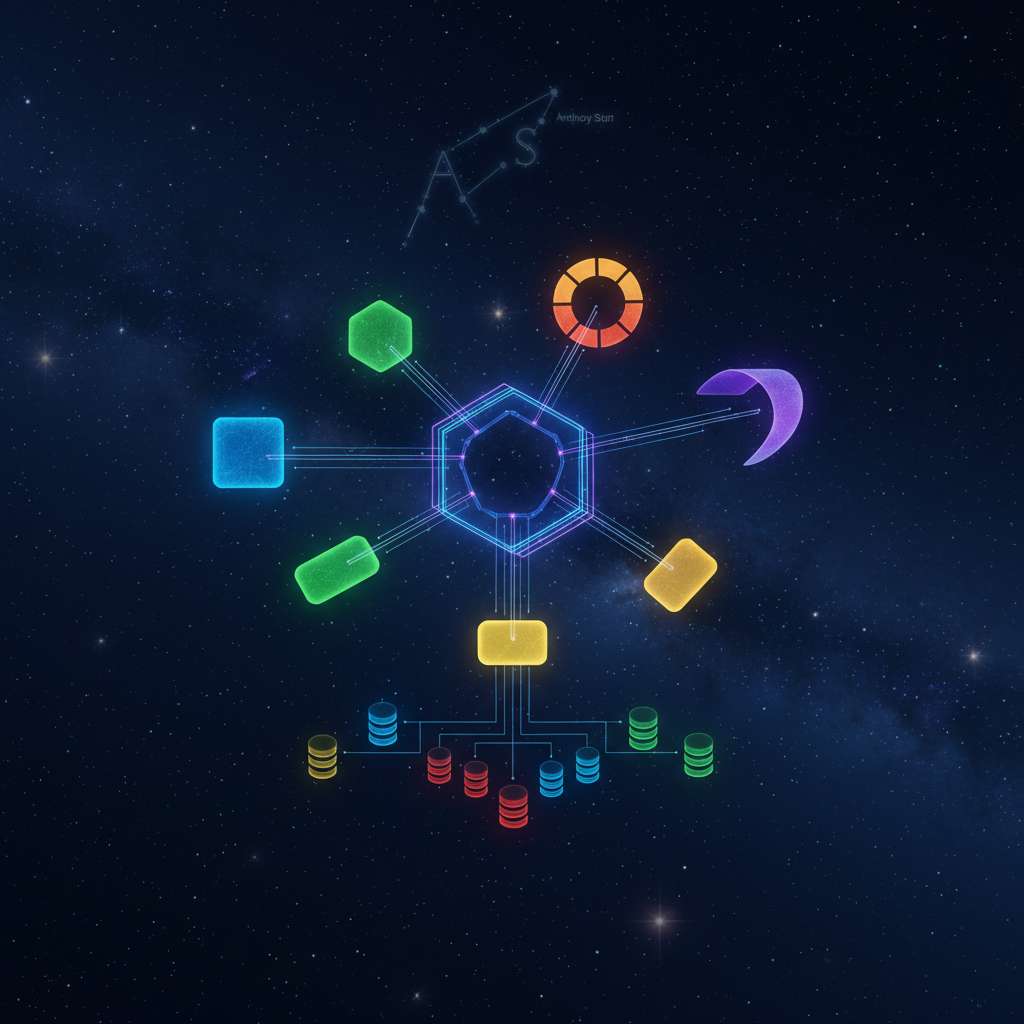
Imagine the 'Anthony Starr' platform as a constellation of independent, specialized services. At its core, a Gateway API acts as the front door, authenticating requests and routing them to specialized Microservices. A User Management Service handles authentication and profiles. A Workflow Engine Service orchestrates complex, multi-step business processes unique to your offering. A Data Analytics Service processes and provides insights from proprietary data. All these services communicate asynchronously via a Message Broker (e.g., Kafka or RabbitMQ) and persist data in purpose-built Databases (e.g., PostgreSQL for relational data, MongoDB for flexible documents, Redis for caching). A Cloud Provider (AWS, Azure, GCP) hosts these components, leveraging managed services for scalability and reliability. This modularity ensures that as your 'Anthony Starr' evolves, you can scale or update individual components without bringing down the entire system.
- Key Activity: System Design Workshops, Technology Stack Selection, Infrastructure Planning.
- Output: Architecture Diagrams, API Specifications, Database Schemas.
Phase 3: Iterative Development (The "What")
This is where the code gets written. Employ agile methodologies (Scrum, Kanban) to break down the development into short, manageable sprints. Focus on delivering working software incrementally, allowing for continuous feedback and adaptation. Prioritize building the Minimum Viable Product (MVP) first, then iterate based on real-world usage.
Consider a crucial piece of 'Anthony Starr' logic that can't be handled by generic tools – for instance, a highly specialized eligibility calculator for a unique service tier:
# Example: Custom eligibility logic for 'Anthony Starr' service
def calculate_starr_eligibility(user_profile: dict, service_tier: str, historical_data: list) -> bool:
    """
    Determines if a user is eligible for a special 'Anthony Starr' service tier.
    This logic is highly specific and not configurable via generic SaaS.
    """
    if not user_profile.get("is_active_subscriber", False):
        return False # Must be an active subscriber

    # Tier-specific conditions
    if service_tier == "premium_alpha":
        # Requires specific engagement metrics and a minimum spend
        min_spend_achieved = sum([item['amount'] for item in historical_data if item['type'] == 'purchase']) >= 1000
        high_engagement = user_profile.get("engagement_score", 0) > 0.8
        return min_spend_achieved and high_engagement

    elif service_tier == "beta_innovator":
        # Requires participation in specific programs or a high referral count
        has_participated_program = any(event['type'] == 'program_enrollment' for event in historical_data)
        high_referral_count = user_profile.get("referral_count", 0) >= 5
        return has_participated_program or high_referral_count

    else:
        # Default eligibility for other tiers
        return user_profile.get("account_age_days", 0) >= 90

# Example usage (would be part of a larger API or workflow)
# user = {"is_active_subscriber": True, "engagement_score": 0.9, "referral_count": 6, "account_age_days": 120}
# data = [{"type": "purchase", "amount": 1200}, {"type": "program_enrollment", "id": "P123"}]
# print(calculate_starr_eligibility(user, "premium_alpha", data)) # True
# print(calculate_starr_eligibility(user, "beta_innovator", data)) # True
This Python snippet illustrates a custom function that integrates various user attributes and historical data points to determine eligibility for a unique service tier. This kind of nuanced, multi-factor logic is exceedingly difficult, if not impossible, to implement purely through configuration in an off-the-shelf platform. It requires direct control over the codebase to define and evolve the specific rules that drive your 'Anthony Starr' advantage.
- Key Activity: Sprint Planning, Daily Stand-ups, Code Reviews, Continuous Integration/Deployment.
- Output: Working Software Increments, Automated Tests.
Phase 4: Deployment & Iteration (The "Go Live")
Once the MVP is ready, deploy it to a production environment. Leverage modern DevOps practices for automated deployments and robust monitoring. Gather user feedback, analyze performance data, and continuously iterate on the platform. Your 'Anthony Starr' project is a living system that will evolve alongside your business.
- Key Activity: Production Deployment, Monitoring & Alerting, User Feedback Collection, Post-Mortems.
- Output: Live Platform, Performance Metrics, Iteration Backlog.
The Real Costs: Beyond the Sticker Price
When evaluating build vs. buy, it's crucial to look beyond the initial sticker price. OTS solutions often have hidden costs:
- Licensing Fees at Scale: As your user base or data volume grows, so do recurring subscription costs, which can quickly outpace a custom solution's TCO.
- Integration Costs: Custom integrations for OTS tools can be complex, expensive, and fragile, leading to significant development and maintenance overhead.
- Opportunity Cost: The biggest hidden cost is the inability to innovate. If your core system can't adapt, you miss market opportunities, lose competitive edge, and frustrate your customers.
- Vendor Lock-in: Migrating away from a deeply embedded OTS solution can be a monumental and costly undertaking, effectively holding your business hostage.
- Technical Debt (of a different kind): While custom builds can incur technical debt, so can OTS solutions via workarounds and suboptimal processes that accumulate over time.
A custom 'Anthony Starr' platform, while requiring a larger initial investment, offers predictable long-term costs, complete control over your intellectual property, and the freedom to innovate without vendor constraints.
Mitigating Risk in a Custom Build
A custom build isn't without its risks, but these can be effectively managed with the right approach and partners:
- Start with an MVP: Don't try to build everything at once. Define the core, essential features for your 'Anthony Starr' MVP and get it to market quickly. Iterate and expand based on real user feedback.
- Modular Architecture: Design your system with independent, loosely coupled components (like microservices). This reduces complexity, makes development faster, and allows for easier maintenance and scaling.
- Experienced Team: Partner with a development team that has a proven track record in building scalable, robust platforms. Their expertise in architecture, technology stack selection, and agile methodologies is invaluable.
- Cloud-Native Principles: Leverage cloud services (AWS, Azure, GCP) for infrastructure, databases, and managed services. This reduces operational overhead, enhances scalability, and improves reliability.
- Automated Testing & DevOps: Implement comprehensive automated testing and robust DevOps practices from day one. This ensures code quality, speeds up deployments, and minimizes errors.
Key Takeaways
Deciding to build a custom 'Anthony Starr' platform is a strategic investment in your startup's future. While off-the-shelf solutions offer quick wins for generic tasks, they inherently limit your ability to differentiate, scale, and innovate where it matters most.
For systems that embody your unique value proposition, a custom approach provides unparalleled control, flexibility, and the long-term agility needed to thrive in a competitive market. By focusing on a clear MVP, adopting a modular architecture, and partnering with experienced technical teams, you can mitigate the risks and unlock the full potential of your 'Anthony Starr' project.
At PolarSoftBD, we specialize in helping startups like yours navigate the complexities of building custom SaaS platforms, CRM systems, and critical operational tools from MVP to enterprise scale. We understand the nuances of architecting solutions that not only meet your immediate needs but also provide a robust foundation for future growth and innovation.