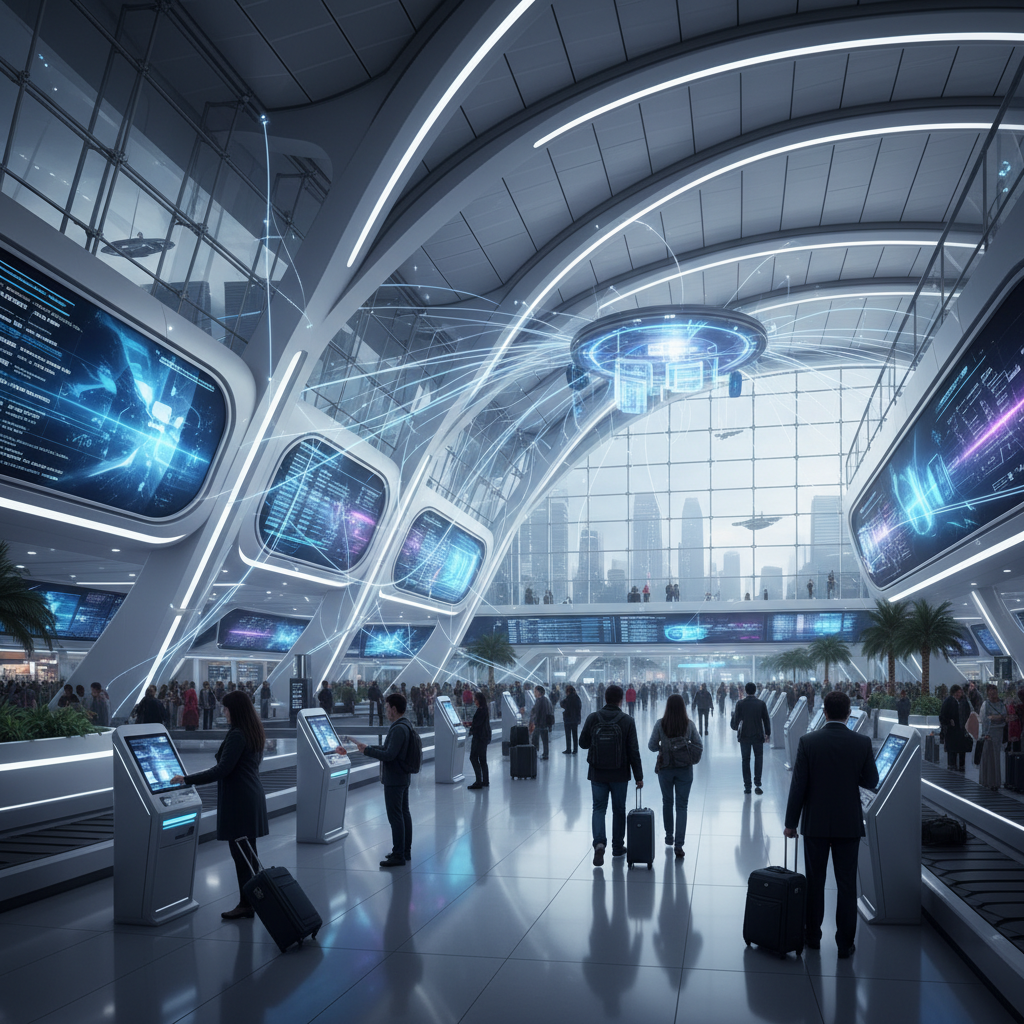
TL;DR: LaGuardia Airport's multi-billion dollar redevelopment wasn't just about new terminals; it was a profound technological transformation. This article explores how integrated operational systems, advanced passenger technologies, smart infrastructure, and a robust cybersecurity framework were engineered to create a modern, efficient, and user-friendly airport, setting a new standard for urban aviation hubs.
Beyond Runways: The Tech Backbone of LaGuardia's Transformation
For decades, LaGuardia Airport was synonymous with congestion and outdated facilities. Its recent multi-billion dollar redevelopment, however, has transformed it into a gleaming, modern gateway to New York City. While the architectural marvels are evident, the true story of its rebirth lies beneath the surface, in the sophisticated engineering and technological integration that now powers its operations and enhances the passenger experience. At PolarSoftBD, we understand the complexities of large-scale system overhauls, and LaGuardia stands as a prime example of how technology can redefine critical infrastructure.
The Engineering Challenge of Modernization
Rebuilding an airport while it remains fully operational is an immense logistical and engineering challenge. It's akin to performing open-heart surgery on a living patient. Every new system, every piece of integrated technology, had to be deployed and tested without disrupting the millions of passengers and thousands of flights that continued to pass through daily. This required meticulous planning, phased implementation, and a deep understanding of system interoperability. The goal wasn't just to replace old with new, but to create a seamless, intelligent ecosystem capable of adapting to future demands.
Integrated Operational Systems: The Airport's Central Nervous System
At the heart of the new LaGuardia is a highly integrated suite of operational systems. These systems are designed to orchestrate the complex dance of an airport, from the moment an aircraft approaches to when its passengers depart.
- Flight Information Display Systems (FIDS): Beyond simple flight times, modern FIDS are dynamic, pulling real-time data from air traffic control, airline systems, and ground operations to provide accurate, up-to-the-minute information on gates, baggage claim, and estimated wait times. This requires robust data pipelines and reliable network infrastructure to ensure consistency across hundreds of displays.
- Gate Management Systems: These systems dynamically assign gates based on real-time flight schedules, aircraft type, and turnaround times. They consider factors like passenger boarding bridges availability, maintenance requirements, and even airline preferences, optimizing resource utilization and minimizing delays.
- Baggage Handling Systems (BHS): The new BHS incorporates advanced automation and tracking capabilities. RFID tags and barcode scanners ensure that luggage is efficiently sorted, transported, and delivered to the correct carousel or connecting flight. Predictive analytics are even being explored to anticipate potential bottlenecks and reroute bags proactively.
- Ground Operations Coordination: Communication between ground crews, air traffic controllers, and airline staff is critical. Integrated digital platforms allow for real-time sharing of information regarding aircraft pushback, fueling, catering, and cleaning, streamlining turnaround times and improving safety.
The integration of these disparate systems into a cohesive whole was a monumental task, requiring extensive API development, middleware solutions, and a centralized command center to monitor and manage operations across the entire airport campus.
Elevating the Passenger Journey with Smart Technology
The passenger experience was a primary focus of LaGuardia's redevelopment, and technology plays a pivotal role in making it smoother, faster, and less stressful.
- Self-Service and Biometrics: From self-bag drop kiosks to biometric boarding gates, technology empowers passengers to take control of their journey, reducing wait times and human interaction points. Facial recognition technology, with appropriate privacy safeguards, is being piloted to streamline security checks and boarding processes.
- Dynamic Wayfinding: Interactive digital maps and smart signage provide personalized directions, helping passengers navigate the expansive terminals, locate amenities, and reach their gates efficiently. These systems can dynamically update based on real-time crowd movements or gate changes.
- Mobile Connectivity and Apps: High-speed Wi-Fi is a given, but airport-specific mobile applications offer much more: real-time flight updates, parking availability, food and retail ordering, and even virtual queuing for certain services. This creates a connected ecosystem that extends beyond physical touchpoints.
- Environmental Controls and Comfort: Smart building management systems monitor and adjust lighting, temperature, and air quality, creating a more comfortable and energy-efficient environment for travelers and staff alike.
These innovations collectively aim to transform the airport from a mere transit point into an intuitive, enjoyable part of the travel experience.
Smart Infrastructure and IoT: The Invisible Workforce
Beyond the visible passenger amenities, a vast network of smart infrastructure and Internet of Things (IoT) devices forms the invisible workforce of the modern LaGuardia.
- Sensor Networks: Thousands of sensors are embedded throughout the airport, monitoring everything from escalator performance and restroom cleanliness to gate occupancy and energy consumption. This data feeds into centralized dashboards, enabling predictive maintenance and proactive resource allocation. For example, a sensor detecting unusual vibration in a baggage conveyor can trigger a maintenance alert before a critical failure occurs.
- Security and Surveillance: Advanced CCTV systems, integrated with AI-powered analytics, enhance security monitoring, detect unusual activities, and assist in crowd management. Access control systems for restricted areas are also highly digitized and integrated.
- Sustainability and Energy Management: IoT devices monitor HVAC systems, lighting, and power grids, allowing operators to optimize energy usage, reduce waste, and contribute to the airport's sustainability goals. This includes intelligent lighting systems that adjust based on natural light availability and occupancy.
This pervasive network of sensors and intelligent systems provides operators with unprecedented visibility and control, enabling more efficient and responsive management of the entire facility.
The Foundation: Robust Network and Cybersecurity
None of these advanced systems would function without a robust, resilient, and secure network infrastructure. An airport is a critical piece of national infrastructure, making it a prime target for cyber threats.
- High-Availability Network: The network must support a massive volume of data traffic from thousands of devices, applications, and users, with near-zero downtime. Redundant systems, failover mechanisms, and advanced network monitoring are essential.
- Cybersecurity Framework: A multi-layered cybersecurity strategy is paramount. This includes advanced firewalls, intrusion detection/prevention systems, endpoint security, regular vulnerability assessments, and a dedicated security operations center (SOC) to monitor for and respond to threats 24/7. Protecting passenger data, operational integrity, and national security assets is a continuous, evolving challenge.
Lessons Learned and The Future
The technological transformation of LaGuardia Airport offers valuable insights for any large-scale infrastructure project. It underscores the importance of:
- Holistic Planning: Technology cannot be an afterthought; it must be integrated into the core design from day one.
- Scalability and Flexibility: Systems must be designed to grow and adapt to future technological advancements and changing operational needs.
- Resilience and Security: Given the critical nature of airport operations, systems must be inherently resilient to failures and robust against cyber threats.
- User-Centric Design: Ultimately, technology should serve to improve the experience for both passengers and operational staff.
As LaGuardia continues to evolve, the focus will remain on leveraging emerging technologies like advanced AI for predictive operations, further integration of autonomous vehicles for ground support, and enhanced personalized services. The journey of transforming LaGuardia is a testament to what can be achieved when visionary design meets cutting-edge engineering.