- Stripe
- Usage-Based Billing
- Next.js
- Webhooks
- Payments
- Aviation MRO
Complex Usage-Based Billing for Aerospace Services: Stripe Metering & Webhooks in Next.js
Building a billing system for aviation Maintenance, Repair, and Overhaul (MRO) that accurately tracks highly variable usage—from flight hours to specific component…
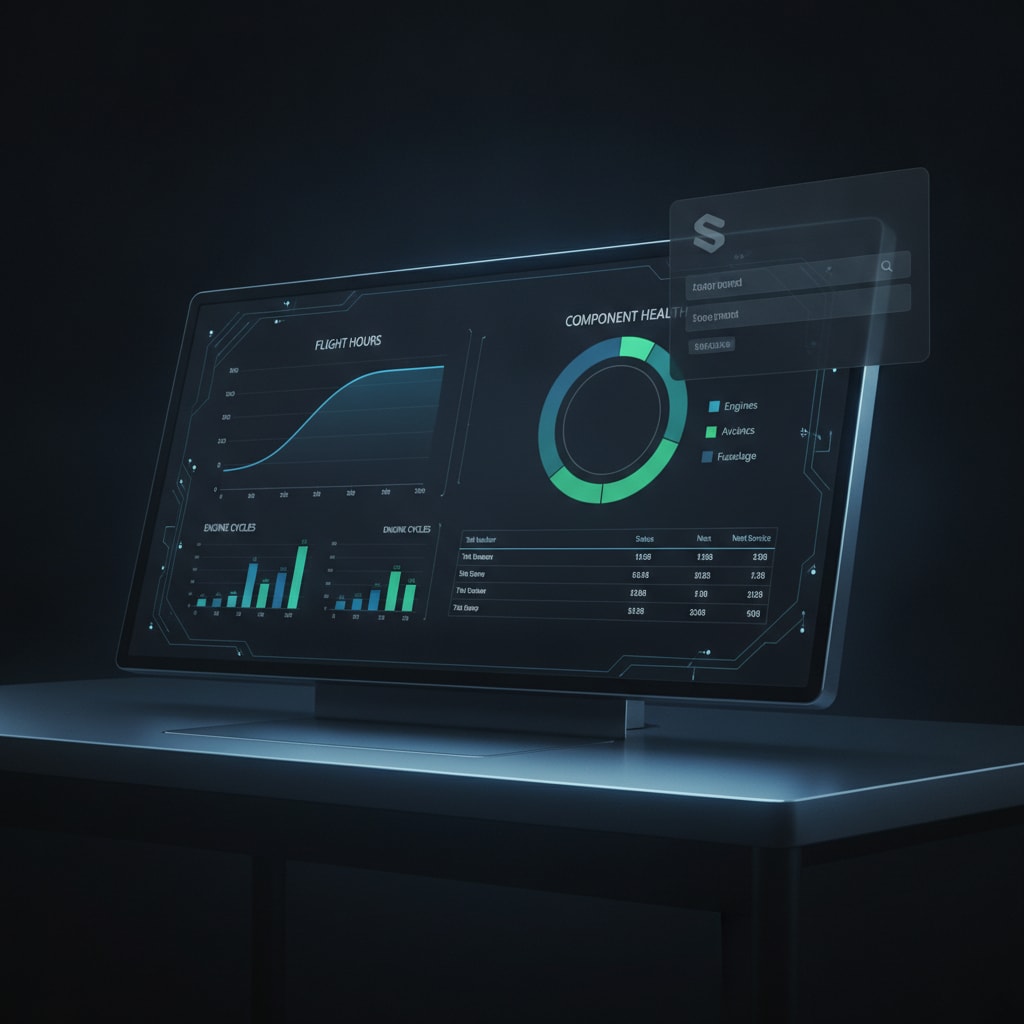
Technical founders and CTOs building SaaS platforms for the aviation Maintenance, Repair, and Overhaul (MRO) sector often face a formidable challenge: designing a flexible, accurate, and scalable billing system that reflects highly variable usage patterns. Unlike simple seat-based subscriptions, MRO billing demands granular tracking of metrics such as flight hours, landing cycles, specific component run-times, or even consumables used per maintenance event. This isn't just about collecting payments; it's about translating complex operational data into precise, auditable invoices, a task where traditional billing models quickly break down. If you've tried to adapt a standard subscription service and hit a wall with dynamic pricing or usage reconciliation, you're in the right place.
TL;DR
- Aviation MRO requires highly dynamic, usage-based billing beyond fixed subscriptions.
- Stripe's
Subscription ItemsandUsage RecordsAPI are ideal for metering variable consumption. - Robust webhook handling in Next.js is critical for processing usage events and invoice lifecycle, demanding idempotency and careful sequencing.
- Production-grade implementations must account for race conditions, data discrepancies, and secure API interactions.
- Accurate usage reporting and transparent customer dashboards build trust and prevent billing disputes in a high-stakes industry.
The MRO Billing Conundrum: Beyond Simple Subscriptions
The aviation MRO industry operates on precision and rigorous standards. Billing within this sector must reflect that same level of accuracy. Imagine a scenario where an airline pays for engine maintenance based on its actual flight hours, or for a specific component replacement tied to its operational cycles. A fixed monthly fee or even tiered pricing based on broad usage bands simply won't cut it.
This complexity arises from several factors: highly variable asset utilization, regulatory compliance requiring detailed usage logs, and the high cost of components and labor. Billing needs to scale from small charter operators to large commercial airlines, each with unique fleet compositions and maintenance schedules. Manually tracking and invoicing these metrics is prone to error, expensive, and a bottleneck for growth.
Furthermore, incorrect billing can erode trust and lead to costly disputes. For a SaaS platform serving MRO, providing crystal-clear, auditable invoices derived from real-world usage data is a non-negotiable feature, not a nice-to-have.
Stripe's Solution: Metered Usage with Subscription Items
Stripe offers a powerful primitive for handling this exact problem: metered usage through Subscription Items and Usage Records. Instead of defining a fixed price for a subscription item, you define a usage-based price. Your application then reports usage to Stripe, which aggregates these records and bills the customer at the end of the billing cycle.
This approach provides immense flexibility. You can define multiple usage-based metrics (e.g., 'flight_hours', 'landing_cycles', 'component_run_time') as separate subscription items on a single customer subscription. Stripe handles the aggregation, prorations, and invoicing, significantly reducing the development burden on your end.
Architecture Overview: From Sensor to Invoice
Implementing this effectively requires a clear data flow. Consider an MRO SaaS that integrates with aircraft telemetry systems or maintenance logs. Usage events (e.g., 'aircraft X flew for 2.5 hours', 'component Y completed 10 cycles') originate from these external systems or your internal application logic.
- Usage Event Generation: Your MRO application, potentially via IoT devices or manual data entry, generates discrete usage events for specific metrics and customers.
- API Endpoint for Reporting: A secure backend API endpoint in your Next.js application receives these usage events.
- Stripe Usage Record Creation: This backend endpoint calls Stripe's
subscriptionItems.createUsageRecordAPI to report the usage. - Stripe Aggregation & Invoicing: Stripe aggregates the reported usage over the billing period and generates an invoice.
- Webhook Processing: Stripe sends webhooks (e.g.,
invoice.created,invoice.paid) back to your Next.js application to notify you of billing events. - Customer Dashboard: Your Next.js frontend displays current usage and billing history, pulled from your database (updated via webhooks) or directly from Stripe.
Implementing Usage Reporting (Backend)
The core of usage-based billing is accurately reporting usage to Stripe. This typically happens via a dedicated API endpoint in your Next.js backend, which your MRO application or other services call. Here's a simplified example using the App Router pattern for clarity, though it's applicable to pages/api as well.
// app/api/usage/report/route.ts
import { NextRequest, NextResponse } from 'next/server';
import Stripe from 'stripe';

const stripe = new Stripe(process.env.STRIPE_SECRET_KEY!, {
  apiVersion: '2024-04-10',
});

export async function POST(req: NextRequest) {
  const { subscriptionItemId, quantity, timestamp, idempotencyKey } = await req.json();

  if (!subscriptionItemId || typeof quantity !== 'number' || !timestamp || !idempotencyKey) {
    return NextResponse.json({ error: 'Missing required parameters.' }, { status: 400 });
  }

  try {
    // Crucial for production reliability: IdempotencyKey prevents duplicate usage records on retries.
    // The idempotencyKey should be unique per usage event from your system.
    const usageRecord = await stripe.subscriptionItems.createUsageRecord(
      subscriptionItemId,
      {
        quantity,
        timestamp,
        action: 'increment', // or 'set' depending on your metering model
      },
      {
        idempotencyKey: idempotencyKey,
      }
    );

    return NextResponse.json({ success: true, usageRecord }, { status: 200 });
  } catch (error: any) {
    console.error('Error reporting usage to Stripe:', error);
    return NextResponse.json({ error: error.message }, { status: 500 });
  }
}
Key considerations for this endpoint:
subscriptionItemId: This identifies which specific usage-based metric (e.g., 'flight_hours') on a customer's subscription you are updating. You'll retrieve this when the subscription is created or updated.quantity: The amount of usage to report. Useaction: 'increment'for cumulative usage (e.g., adding 2.5 hours) oraction: 'set'if you're reporting an absolute value (e.g., total flight hours for the month).timestamp: Essential for accurate billing periods. Ensure this reflects when the usage actually occurred, not just when it was reported.idempotencyKey: This is critical. Network issues or retries can lead to duplicate API calls. A uniqueidempotencyKey(e.g., a UUID generated by your system for each usage event) ensures that if the same request is sent multiple times, Stripe processes it only once. Without it, you risk over-billing your customers.
Handling Webhooks for Billing Cycles
While reporting usage is half the battle, reacting to billing events is the other. Stripe's webhooks are the authoritative source for changes in subscription status, invoice generation, and payment outcomes. Your Next.js application needs a robust webhook handler.
// app/api/webhooks/stripe/route.ts
import { NextRequest, NextResponse } from 'next/server';
import Stripe from 'stripe';

const stripe = new Stripe(process.env.STRIPE_SECRET_KEY!, {
  apiVersion: '2024-04-10',
});

const webhookSecret: string = process.env.STRIPE_WEBHOOK_SECRET!;

export async function POST(req: NextRequest) {
  const buf = await req.text();
  const sig = req.headers.get('stripe-signature') as string;

  let event: Stripe.Event;

  try {
    event = stripe.webhooks.constructEvent(buf, sig, webhookSecret);
  } catch (err: any) {
    console.error(`Webhook Error: ${err.message}`);
    return NextResponse.json({ error: `Webhook Error: ${err.message}` }, { status: 400 });
  }

  // Handle the event
  switch (event.type) {
    case 'invoice.created':
      // An invoice was created, potentially for an upcoming billing cycle.
      // You might update your internal records or send a pre-invoice notification.
      const invoiceCreated = event.data.object as Stripe.Invoice;
      console.log(`Invoice created: ${invoiceCreated.id}`);
      // Example: Update customer's dashboard to show pending invoice
      break;
    case 'invoice.paid':
      // Payment successful. Fulfill services, update internal records.
      const invoicePaid = event.data.object as Stripe.Invoice;
      console.log(`Invoice paid: ${invoicePaid.id}`);
      // Example: Grant access, update billing history in your DB
      break;
    case 'invoice.payment_failed':
      // Payment failed. Initiate dunning, restrict access if necessary.
      const invoiceFailed = event.data.object as Stripe.Invoice;
      console.log(`Invoice payment failed: ${invoiceFailed.id}`);
      // Example: Send payment failure email, mark subscription as past_due
      break;
    case 'customer.subscription.updated':
      // Subscription changed (e.g., plan change, status change).
      const subscriptionUpdated = event.data.object as Stripe.Subscription;
      console.log(`Subscription updated: ${subscriptionUpdated.id}`);
      // Example: Sync subscription status with your user database
      break;
    // ... handle other event types as needed
    default:
      console.log(`Unhandled event type ${event.type}`);
  }

  return NextResponse.json({ received: true }, { status: 200 });
}
Critical aspects of webhook handling:
- Signature Verification: Always verify the Stripe signature (
stripe.webhooks.constructEvent). This ensures the webhook truly came from Stripe and hasn't been tampered with. Without it, your system is vulnerable to malicious actors. - Idempotency for Webhooks: While Stripe attempts to deliver webhooks reliably, duplicates can occur due to network issues or retries. Store a record of processed
event.ids in your database and ignore events you've already handled. This prevents double-processing (e.g., granting access twice). - Asynchronous Processing: For complex logic, consider offloading webhook processing to a background job queue. This keeps your webhook endpoint fast (responding within Stripe's timeout) and resilient to long-running tasks or failures.
- Error Handling and Retries: Your webhook handler should be designed to fail gracefully. Stripe will retry sending webhooks if your endpoint returns a non-2xx status code. Ensure your error logging is robust.
Production Edge Cases: Where Reliability Matters
Building for production means anticipating and mitigating failures. For usage-based billing in MRO, these edge cases are paramount:
Idempotency: The Double-Edged Sword of Retries
Both reporting usage and processing webhooks require careful idempotency. If your MRO system tries to report usage multiple times due to a network glitch, the idempotencyKey on createUsageRecord prevents over-billing. Similarly, if Stripe retries an invoice.paid webhook, your system must not fulfill services or update records twice. Store the Stripe event.id in your database and check against it before processing.
Race Conditions: Timing is Everything
What happens if usage is reported just as an invoice is being finalized? Stripe's system is designed to handle this, but your internal system must be aware. If you rely on invoice.created to snapshot usage, but more usage comes in immediately after, you might show a discrepancy to the customer. Consider:
- Reporting Frequency: How often do you report usage? Real-time is ideal for accuracy, but batching might be necessary for high-volume scenarios.
- Customer Visibility: Always show customers their current usage, not just what's been invoiced. This can be pulled directly from Stripe or your own aggregated data.
Security: Protecting Sensitive Billing Data
- API Key Management: Never expose your Stripe secret key in frontend code. All Stripe API calls should originate from your secure backend.
- Webhook Secrets: Treat your
STRIPE_WEBHOOK_SECRETas a highly sensitive credential. Rotate it periodically. - Data Minimization: Store only the necessary customer and billing data in your own database, relying on Stripe as the source of truth for financial transactions.
Error and Refund Paths: When Things Go Wrong
Despite best efforts, errors happen. An MRO sensor might send incorrect data, leading to an over-reported usage. Your system must have a path to correct this:
- Adjusting Usage: Stripe allows for updating usage records, but it's often simpler to issue a credit or adjust the next invoice if a mistake is caught after invoicing.
- Refunds: If an invoice was paid based on incorrect usage, you'll need to issue a refund via the Stripe API. Ensure your internal systems reflect this refund and any associated service adjustments.
- Audit Trails: Maintain detailed logs of all usage reports, webhook events, and any manual adjustments. This is crucial for compliance and dispute resolution in a regulated industry like aviation.
Frontend Integration: Transparency for Trust (Next.js)
Your Next.js frontend plays a vital role in building trust. Customers need to see their current usage, past invoices, and upcoming charges clearly. You can achieve this by:
- Fetching Usage Data: Create a backend API route that queries Stripe for the current usage of a
SubscriptionItemor aggregates your own usage records and presents it to the frontend. - Displaying Invoice History: Use Stripe's Customer Portal (a pre-built, hosted solution) or fetch invoice data via the Stripe API to display past invoices and payment statuses.
- Subscription Management: Allow customers to view and potentially modify their subscription details (e.g., changing plans, updating payment methods) either through the Customer Portal or a custom UI backed by Stripe API calls.
Key Takeaways
- Aviation MRO's dynamic usage patterns are a perfect fit for Stripe's metered billing capabilities.
- Prioritize
idempotencyKeyforcreateUsageRecordandevent.idfor webhook processing to prevent billing errors. - Secure your webhook endpoint with signature verification and process events asynchronously for resilience.
- Anticipate and build for production edge cases like race conditions, data discrepancies, and robust error handling.
- Provide transparent usage and billing information in your Next.js application to foster customer trust and reduce support overhead.
Ship this without the trial-and-error
Implementing complex usage-based billing in a high-stakes industry like aviation MRO is not just about writing code; it's about architecting for resilience, accuracy, and compliance. If your team is grappling with the intricacies of Stripe Connect marketplaces, advanced subscription logic, or usage-based billing for your next AI SaaS or multi-tenant application, you don't have to navigate these waters alone. PolarSoftBD specializes in production payments and AI engineering, helping technical founders and CTOs ship robust solutions without the typical trial-and-error.
For a deeper dive into usage-based billing strategies, check out our article on Usage-Based Billing with Stripe and Next.js.
Explore our Stripe Integration Services to see how we can accelerate your development.
Ready to architect your next production-grade payments system? Book a free strategy call with us today.
Last updated November 4, 2026
Get thoughtful updates
Join our monthly digest for founders and builders.