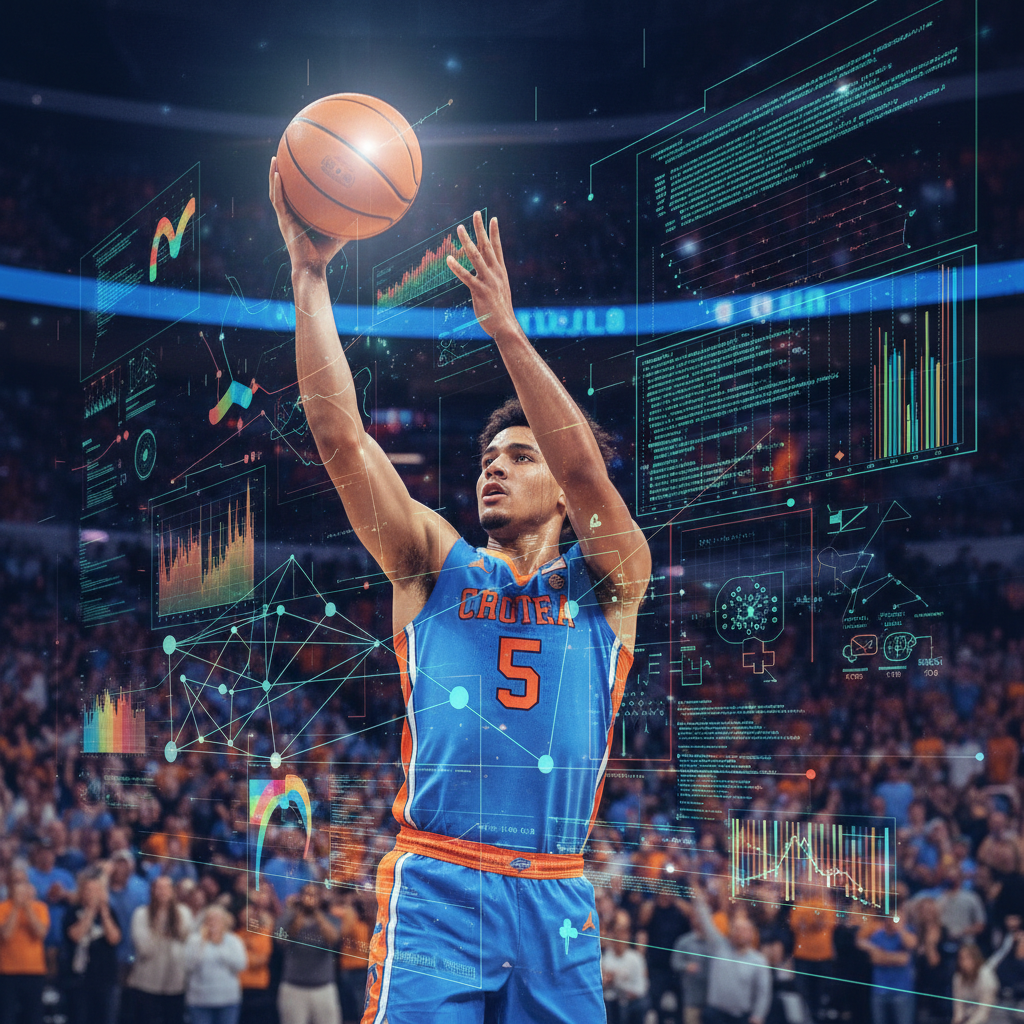
TL;DR: Modern sports rely heavily on sophisticated software engineering to collect, process, and visualize vast amounts of athlete performance data. This article explores the underlying systems, from data capture to actionable insights, using a prominent athlete like Marcus Paige to illustrate how technology enhances understanding and strategy, driving performance beyond traditional metrics.
The Unseen Architect: Software Engineering in Modern Sports
The roar of the crowd, the precision of a pass, the clutch shot – these are the moments that define sports. Yet, beneath the surface of every elite athletic performance lies a complex web of technology, meticulously engineered to dissect, understand, and optimize every aspect of the game. For an engineering blog like PolarSoftBD, it's fascinating to peel back the layers and examine the software systems that have revolutionized how teams and athletes prepare, compete, and recover. This isn't just about statistics; it's about the robust, scalable, and intelligent platforms that turn raw data into strategic advantage.
Once, coaches relied primarily on intuition, observation, and basic stat sheets. Today, the landscape is dramatically different. Every movement, every decision, every physiological response can be captured, analyzed, and presented in real-time. This transformation is a testament to the ingenuity of software engineers who build the tools that empower athletes and their support staff.
The Data Deluge: From Raw Play to Structured Information
The first challenge in sports analytics is data acquisition. Modern sports generate an unprecedented volume and variety of data. This includes:
- Positional Data: High-speed cameras and wearable GPS trackers capture the precise location and movement of every player and the ball multiple times per second.
- Biometric Data: Wearable sensors monitor heart rate, exertion levels, sleep patterns, and even hydration, providing insights into an athlete's physical state.
- Event Data: Manual tagging or automated vision systems record specific events like shots, passes, rebounds, turnovers, and defensive actions, often with contextual details like shot distance or defender proximity.
- Environmental Data: Factors like court conditions, weather, and altitude can also be logged and correlated with performance.
The engineering challenge here is not just collecting this data, but doing so reliably, accurately, and often in real-time. This requires robust hardware integrations, efficient data transmission protocols, and resilient edge computing solutions to process information close to the source before sending it to centralized systems.
Engineering the Data Pipeline: Collection to Storage
Once collected, raw sports data is often noisy, unstructured, and massive. This is where the core of data engineering comes into play. A typical sports analytics pipeline involves several critical stages:
Ingestion and ETL
Data from various sources – cameras, wearables, manual inputs – must be ingested into a central system. This often involves custom APIs, streaming data processors (like Apache Kafka or AWS Kinesis), and robust Extract, Transform, Load (ETL) processes. The 'Transform' phase is crucial, as it cleans, normalizes, and enriches the data, ensuring consistency across different sources and preparing it for analysis.
Data Storage and Management
Given the volume and velocity of sports data, a single database solution is rarely sufficient. Engineering teams typically employ a hybrid approach:
- NoSQL Databases: For storing raw, unstructured, or semi-structured data (e.g., JSON logs from sensors).
- Relational Databases: For structured, aggregated data that requires complex querying and reporting (e.g., player statistics, game summaries).
- Data Lakes/Warehouses: For long-term storage and advanced analytical workloads, often leveraging cloud-based solutions like Amazon S3, Google Cloud Storage, or Snowflake.
Scalability, data integrity, and efficient querying are paramount, requiring careful architectural design to handle fluctuating loads and diverse analytical needs.
The Art of Visualization: Making Data Actionable
Even the most perfectly processed data is useless if it can't be understood by coaches, trainers, and athletes. This is where front-end engineering and UI/UX design play a pivotal role. The goal is to translate complex datasets into intuitive, interactive dashboards and reports that provide actionable insights.
Key features of effective sports data visualization platforms include:
- Interactive Dashboards: Allowing users to filter, drill down, and compare data points (e.g., a player's shooting efficiency from different court zones).
- Heatmaps and Spatial Analysis: Visualizing player movement, shot locations, or defensive coverage areas on a court or field.
- Trend Analysis: Charting performance over time, identifying patterns, and predicting future trajectories.
- Real-time Alerts: Notifying coaching staff of critical events or performance deviations during a game or practice.
These platforms often leverage modern web frameworks (React, Angular, Vue.js) and powerful data visualization libraries (D3.js, Chart.js) to deliver rich, responsive user experiences. The engineering challenge lies in rendering complex data quickly and accurately, ensuring that performance insights are delivered without delay.
Marcus Paige: A Case Study in Performance Analysis
Consider an athlete like Marcus Paige, known for his exceptional court vision, shooting prowess, and clutch performances in high-stakes basketball games. While his talent is undeniable, software systems provide a granular understanding of how and why he excels, and where there might be opportunities for further development.
Through advanced analytics platforms, engineers can provide insights into aspects of his game such as:
- Shot Selection and Efficiency: Tracking every shot attempt, its location, the defender's proximity, and the outcome. This allows coaches to identify his most efficient scoring zones, understand shot quality, and optimize offensive strategies. The software might highlight that Paige is exceptionally efficient from the left wing in late-game situations, informing play calls.
- Playmaking and Assist-to-Turnover Ratio: Analyzing his passing decisions, identifying patterns in assists, and understanding the context of turnovers. This helps evaluate his decision-making under pressure and his impact on team ball movement.
- Defensive Impact: Using positional data to assess his defensive rotations, close-outs, and ability to stay in front of opponents. Software can quantify his defensive contribution beyond simple steals or blocks, showing his influence on opponent shot percentages.
- Fatigue and Load Management: Combining biometric data with game performance metrics to understand how physical exertion impacts his efficiency. This is crucial for training staff to optimize practice schedules and prevent injuries, ensuring Paige is at peak performance when it matters most.
These insights are not magic; they are the direct result of meticulously engineered systems that capture, process, and present data in meaningful ways. The software doesn't just record what happened; it helps explain why and suggests what could be done differently.
The Future of Sports Tech: AI, Real-time, and Beyond
The evolution of sports tech continues at a rapid pace. Future developments will likely focus on:
- Advanced AI and Machine Learning: Moving beyond descriptive analytics to predictive and prescriptive models. AI could predict injury risks, optimize game strategies based on opponent tendencies, or even suggest real-time adjustments during a game.
- Hyper-Personalization: Tailoring training regimens and tactical advice to individual athletes based on their unique physiological and performance data.
- Immersive Fan Experiences: Using the same underlying data to power augmented reality broadcasts, interactive apps, and fantasy sports, bringing fans closer to the game.
- Edge AI and Real-time Processing: Pushing more analytical capabilities to the edge, enabling instantaneous feedback to athletes and coaches without reliance on cloud latency.
Conclusion
The symbiotic relationship between software engineering and sports is undeniable. From the sensors on an athlete's body to the cloud infrastructure processing petabytes of data, and the intuitive dashboards guiding coaching decisions, engineers are at the forefront of transforming athletic potential into peak performance. The story of an athlete like Marcus Paige is not just one of talent and dedication, but also a testament to the sophisticated systems that illuminate every facet of their game, pushing the boundaries of what's possible in competitive sports. As technology advances, so too will our understanding and appreciation of the beautiful game, powered by the unseen architects of the digital realm.