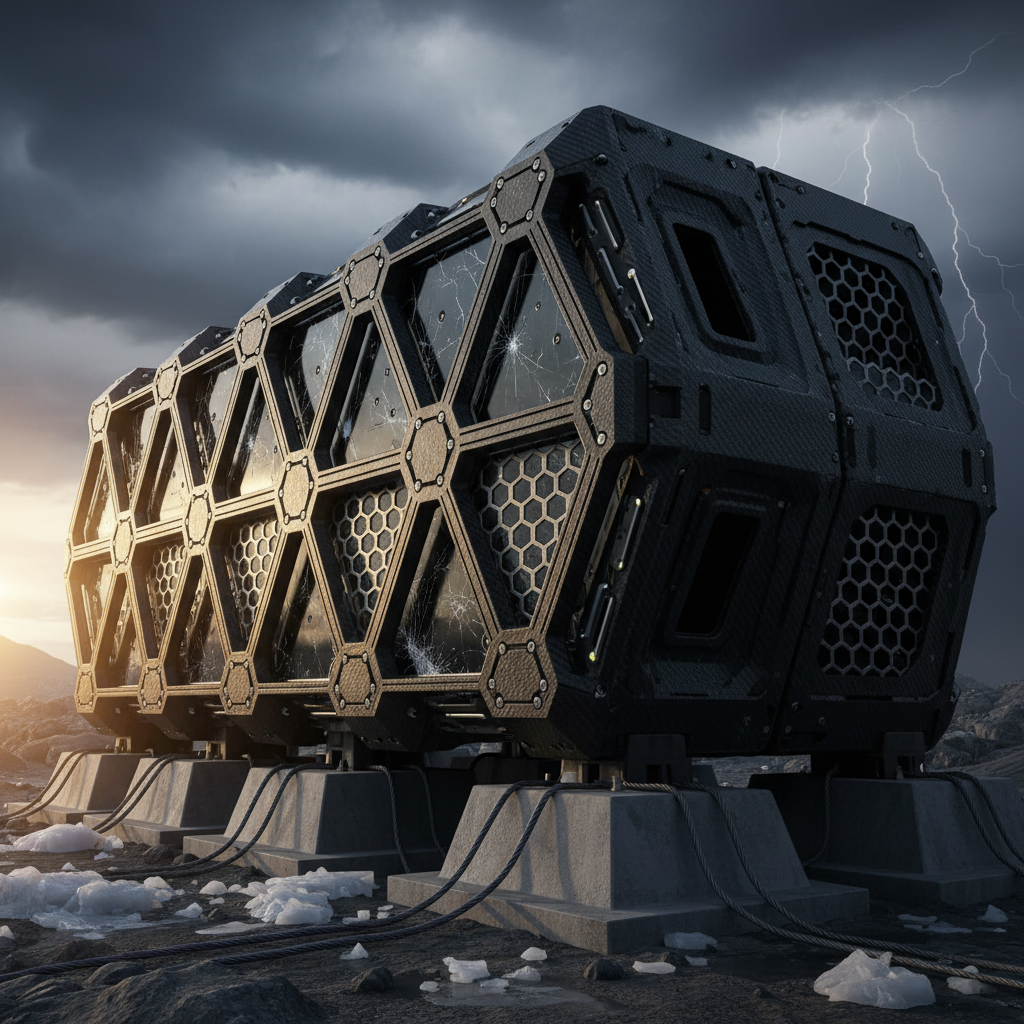
TL;DR: Hail poses a significant, often underestimated, threat to outdoor technological assets. This article explores advanced engineering strategies, from material science and structural design to predictive analytics and automated protective systems, aimed at hardening hardware against severe atmospheric impacts and ensuring operational continuity.
Introduction
In the rapidly expanding landscape of outdoor technological deployments—from sprawling solar farms and critical communication antennas to ubiquitous IoT sensors and autonomous drone fleets—the vulnerability of physical hardware to environmental stressors becomes a paramount concern. Among these, hail, often perceived as a mere inconvenience, stands as a formidable and frequently destructive force. Unlike other weather phenomena that might cause gradual degradation, hail strikes with immediate, concentrated kinetic energy, capable of inflicting catastrophic damage to sensitive electronic components and structural integrity. For engineering teams at PolarSoftBD and beyond, understanding and mitigating this specific threat is not just about asset protection; it's about ensuring the reliability, longevity, and continuous operation of the systems that power our modern world. This article delves into the innovative engineering approaches being developed to defend our technological investments against the silent, yet devastating, assault of hail.
The Silent Destroyer: Understanding Hail's Impact
Hailstones, essentially ice pellets formed in severe thunderstorms, can vary dramatically in size, density, and velocity. What might start as a pea-sized pellet can grow to the size of a golf ball or even a softball, descending at speeds exceeding 100 miles per hour. When these projectiles strike technological equipment, the impact can be devastating:
- Solar Photovoltaic Panels: Brittle glass layers can shatter, cells can crack, leading to significant power output reduction or complete failure.
- Communication Antennas and Radomes: Dents, cracks, or complete structural compromise can disrupt critical data transmission and reception.
- Outdoor Enclosures and Cabinets: Damage to protective casings can expose internal electronics to moisture, dust, and further physical harm.
- IoT Sensors and Cameras: Small, exposed components are highly susceptible to direct impact, leading to sensor malfunction or data loss.
- Drone Components: Rotors, frames, and cameras on UAVs are particularly vulnerable, risking operational failure and loss of expensive equipment.
The kinetic energy transferred during a large hail impact can far exceed the design tolerances of standard outdoor equipment, necessitating a re-evaluation of material selection and structural engineering.
Engineering for Impact Resistance: Material Science and Design
Mitigating hail damage begins at the foundational level: material selection and structural design. Engineers are increasingly looking beyond conventional solutions to develop hardware that can withstand extreme impacts.
Advanced Material Composites
Traditional materials often fall short. Modern approaches incorporate:
- Self-Healing Polymers: Materials embedded with microcapsules containing healing agents that rupture upon impact, repairing minor cracks and preventing propagation. While still evolving, this offers promising avenues for extending component lifespan.
- Layered Composites: Utilizing multiple layers of different materials—such as a tough outer layer for impact absorption, a softer inner layer for energy dissipation, and a rigid core for structural integrity—can significantly enhance resistance. Examples include advanced fiberglass, carbon fiber reinforced polymers, and even transparent ceramic composites for optical surfaces.
- Elastomeric Coatings: Applying specialized flexible coatings can absorb impact energy, distributing the force over a larger area and preventing localized stress concentrations that lead to shattering or cracking. These coatings can also provide additional weatherproofing.
Structural Reinforcement and Aerodynamic Design
Beyond materials, the physical architecture of equipment plays a crucial role:
- Reinforced Enclosures: Designing housings with internal ribbing, thicker gauge materials, or energy-absorbing internal structures can protect sensitive components. The goal is to dissipate impact energy away from critical electronics.
- Sloped Surfaces and Aerodynamics: For equipment like solar panels or certain antenna types, designing surfaces with optimal angles can reduce the direct impact force by allowing hail to glance off rather than strike perpendicularly. While not always feasible for all equipment, where applicable, this can significantly lessen damage.
- Modular and Replaceable Components: Designing systems with easily replaceable external panels or modules can simplify maintenance and reduce downtime after an event, even if the primary goal is prevention.
Proactive Defense: Predictive and Automated Systems
While robust physical design is essential, the most effective defense often involves proactive measures. Integrating intelligent systems that can anticipate and react to hail threats represents a significant leap forward in hardware protection.
Sensor Networks and Environmental Monitoring
The first line of defense is accurate, real-time data:
- Weather Radar Integration: Leveraging advanced meteorological radar data to track storm cells, predict hail formation, and estimate hailstone size and trajectory.
- Local Sensor Arrays: Deploying localized sensor networks that monitor atmospheric conditions (temperature gradients, humidity, wind shear) known to precede hail events. These micro-weather stations provide granular data crucial for localized predictions.
- Acoustic Sensors: Developing specialized acoustic sensors that can detect the unique sound signatures of hail impacting a surface, providing immediate confirmation of an event.
AI/ML for Predictive Analytics
Raw data becomes actionable intelligence through sophisticated algorithms:
- Hail Prediction Models: Machine learning models trained on historical weather data, radar imagery, and ground observations can predict the probability, intensity, and timing of hail events with increasing accuracy. These models can learn complex patterns that human meteorologists might miss.
- Risk Assessment and Prioritization: AI can assess the vulnerability of different assets within a deployment area and prioritize protective actions based on predicted hail severity and asset criticality.
Automated Mitigation Strategies
With accurate predictions, automated systems can spring into action:
- Retractable Covers: For solar farms or sensitive outdoor equipment, automated systems can deploy protective covers (e.g., reinforced tarpaulins, ballistic fabric shields) over assets when a hail threat is imminent. These systems can be integrated with weather prediction APIs.
- Reorientation of Equipment: In some cases, equipment like directional antennas or certain types of camera arrays could be automatically reoriented to present a less vulnerable profile to oncoming hail, or even temporarily stowed.
- System Shutdowns: For highly sensitive or mobile assets (like drones), an automated alert can trigger a safe landing or shutdown procedure to prevent damage.
Post-Event Assessment and Recovery
Even with the best preventative measures, damage can occur. Rapid and accurate post-event assessment is crucial for efficient recovery and future improvements.
- Drone-Based Inspections: UAVs equipped with high-resolution cameras and thermal imaging sensors can quickly survey large areas (e.g., solar farms) to identify damaged panels or equipment, often detecting issues invisible to the naked eye.
- Computer Vision for Damage Detection: AI-powered image analysis can automatically process drone imagery to pinpoint and categorize hail damage, accelerating assessment and insurance claims.
- Data Logging and Feedback: Comprehensive logging of hail events, damage incurred, and the performance of protective systems provides invaluable data for refining future designs and predictive models. This feedback loop is essential for continuous improvement in hardware hardening.
The Economic Imperative
The investment in hail-resistant design and proactive protection systems is not merely a cost; it's an economic imperative. The costs associated with hail damage—equipment replacement, repair labor, operational downtime, and lost revenue—can quickly dwarf the initial investment in robust engineering solutions. For industries relying on outdoor technology, ensuring operational continuity and minimizing total cost of ownership necessitates a strategic approach to environmental hardening.
Conclusion
As our reliance on outdoor technological deployments grows, so too does the imperative to protect these assets from environmental threats like hail. The convergence of advanced material science, intelligent structural design, sophisticated predictive analytics, and automated mitigation systems is paving the way for a new generation of hardware that is not just functional, but truly resilient. For PolarSoftBD, embracing these innovations means safeguarding critical infrastructure, ensuring uninterrupted service, and maintaining a competitive edge in a world where environmental challenges are increasingly unpredictable. The future of outdoor tech lies in its ability to withstand the elements, and engineering against hail is a critical step in that journey.