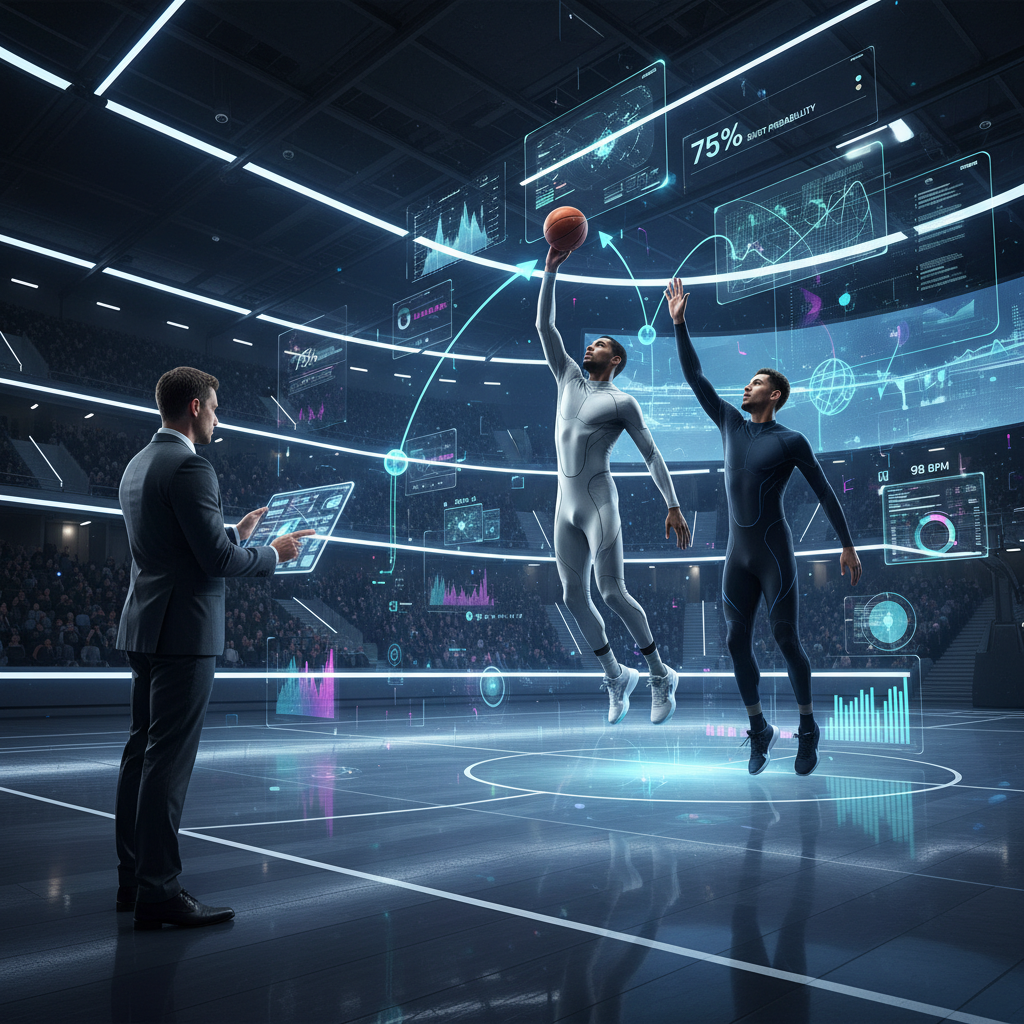
TL;DR Collegiate basketball, once dominated by intuition, is increasingly leveraging data science and artificial intelligence (AI) to gain a competitive edge. This article explores how advanced analytics, from player tracking to predictive modeling, is transforming strategy, player development, and recruitment across university sports programs. We delve into the technologies enabling this shift, the types of insights derived, and the future implications for coaching and athlete performance.
Introduction The roar of the crowd, the squeak of sneakers, the tension of a last-second shot – collegiate basketball is a sport steeped in tradition and raw athleticism. For decades, coaching decisions relied heavily on experience, gut feeling, and the trained eye. While these elements remain crucial, a quiet revolution has been unfolding behind the scenes: the integration of data science and artificial intelligence. This shift is not just about tracking basic statistics; it's about harnessing vast datasets to uncover hidden patterns, predict outcomes, and optimize every facet of a program, from player development to in-game strategy. For engineering teams at PolarSoftBD, understanding these applications provides a fascinating look into how technology is reshaping competitive landscapes far beyond traditional software domains.
The Analytical Revolution in Sports
The journey from simple box scores to sophisticated analytical models has been transformative. Early sports analytics focused on readily available metrics like points, rebounds, and assists. However, the advent of new data collection technologies has opened the door to 'advanced analytics,' which seeks to quantify player efficiency, defensive impact, shot quality, and spatial awareness. In the highly competitive world of NCAA basketball, where margins of victory can be razor-thin, even a fractional improvement derived from data can translate into significant competitive advantage. Teams are no longer just looking at what happened, but why it happened and what is likely to happen next.
The Data Foundation: What and How We Collect
The bedrock of any robust analytics program is comprehensive data collection. In collegiate basketball, this involves several key streams:
- Optical Tracking Data: High-speed cameras positioned around the arena capture the precise X, Y coordinates of every player and the ball multiple times per second. This data, often processed by computer vision algorithms, provides insights into player movement, spacing, defensive rotations, and shot trajectories.
- Wearable Sensors: Devices like smart vests or wristbands monitor biometric data such as heart rate, acceleration, deceleration, and distance covered. This information is invaluable for managing player load, preventing injuries, and tailoring conditioning programs.
- Event Data: Traditional play-by-play data, enriched with detailed event tagging (e.g., specific types of screens, passes, defensive coverages), provides context to player actions.
- Biomechanical Data: Increasingly, motion capture labs are used to analyze shooting forms, jumping mechanics, and running gaits, identifying inefficiencies or potential injury risks.
The technologies underpinning this collection range from specialized camera systems and IoT sensors to robust data pipelines capable of ingesting and processing terabytes of information in near real-time. This necessitates scalable infrastructure and sophisticated data engineering practices to ensure data integrity and accessibility.
From Raw Data to Strategic Insights
Once collected, raw data is transformed into actionable insights through statistical analysis and machine learning. Beyond traditional metrics, analysts now focus on:
- Efficiency Metrics: True Shooting Percentage (TS%), Offensive and Defensive Ratings, and Player Impact Estimate (PIE) provide a more holistic view of a player's contribution beyond basic volume stats.
- Spatial Analytics: Heat maps showing shot distribution, defensive pressure zones, and player spacing reveal strategic tendencies and areas for exploitation or improvement.
- Predictive Modeling: Machine learning algorithms can be trained on historical game data to predict game outcomes, player performance fluctuations, and even identify optimal lineup combinations against specific opponents. For instance, models can assess the probability of a shot going in from any location on the court under varying defensive pressure.
- Opponent Scouting: AI-driven systems can quickly analyze an opponent's tendencies, identifying their preferred offensive sets, defensive schemes, and individual player strengths and weaknesses, allowing coaches to tailor game plans with unprecedented detail.
AI's Role in Game Planning and Player Development
Artificial intelligence extends the capabilities of data science by automating analysis, identifying complex patterns, and even simulating scenarios.
- Personalized Player Development: AI models can analyze a player's performance data, biometric information, and biomechanical assessments to create highly personalized training regimens. For example, an AI might recommend specific drills to improve a player's off-ball movement or adjust their shooting mechanics based on real-time feedback.
- Real-time Coaching Assistance: While still evolving, systems are being developed to provide coaches with real-time insights during games, such as identifying a sudden shift in opponent strategy or suggesting an optimal substitution based on current player fatigue and performance metrics.
- Recruitment Optimization: AI can sift through vast databases of high school and transfer portal statistics, highlight films, and even social media data to identify potential recruits who fit a team's specific playing style and cultural needs, moving beyond subjective evaluations.
- Game Simulation: Advanced AI can simulate thousands of game scenarios, allowing coaches to test different strategies, understand the impact of various lineups, and prepare for critical end-game situations with data-backed confidence.
Navigating the Challenges and Ethical Landscape
Despite its immense potential, integrating data science and AI into collegiate basketball presents challenges. Data privacy and security are paramount, especially when dealing with sensitive biometric and performance data of student-athletes. Ensuring data accuracy and consistency across various collection methods requires robust data governance. Furthermore, there's the ongoing debate about balancing data-driven insights with the intangible aspects of coaching, leadership, and player intuition. Over-reliance on numbers risks dehumanizing the sport or overlooking critical human elements that statistics might not capture. Ethical considerations around the use of predictive analytics for player evaluations and potential biases in algorithms must also be carefully managed.
The Future Court: Hyper-Personalization and Predictive Power
The future of tech in collegiate basketball promises even deeper integration. Imagine augmented reality overlays for coaches during practice, providing instant feedback on player positioning and movement. Expect more sophisticated AI that can not only predict outcomes but also suggest dynamic, adaptive strategies in real-time. The continued miniaturization and improvement of sensors will lead to even richer datasets, enabling hyper-personalized training and injury prevention protocols. As these technologies become more accessible, they will empower smaller programs to compete more effectively by democratizing access to advanced analytical tools.
Conclusion The marriage of data science and AI with collegiate basketball is fundamentally altering the game. It's moving beyond a simple numbers game to a sophisticated interplay of human talent and technological insight. For engineering teams, this domain offers exciting opportunities to apply cutting-edge data engineering, machine learning, and computer vision techniques to enhance performance, mitigate risk, and ultimately, elevate the strategic depth of one of America's most beloved sports. The future of the court is undoubtedly digital, data-driven, and increasingly intelligent.