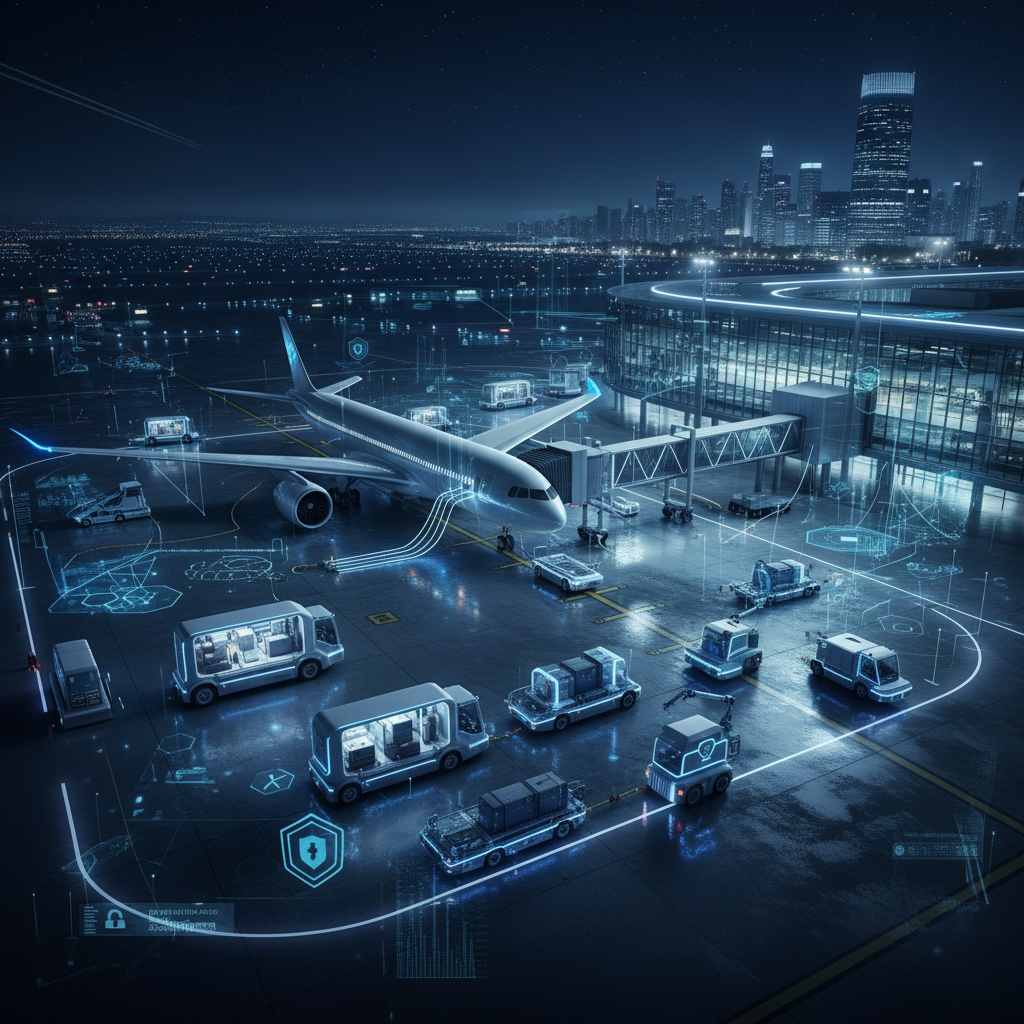
TL;DR: Airport tarmacs are high-risk environments. This article explores how advanced engineering solutions, including IoT sensor networks, real-time data analytics, and intelligent communication systems, are revolutionizing ground safety protocols. By integrating these technologies, airports can significantly reduce the potential for incidents, enhance operational efficiency, and create a safer working environment for ground personnel and aircraft.
Introduction
The bustling symphony of an airport tarmac is a marvel of coordination, yet it's also one of the most complex and potentially hazardous operational zones. With aircraft maneuvering, ground support equipment (GSE) crisscrossing, and personnel performing critical tasks, the margin for error is incredibly thin. Incidents, from minor collisions to more severe events involving personnel, underscore the constant need for robust safety measures. At PolarSoftBD, we recognize that engineering plays a pivotal role in mitigating these risks. This article delves into how cutting-edge technological solutions are being deployed to transform airport ground safety, moving beyond traditional protocols to create a proactive, data-driven defense against accidents.
The Unseen Dangers of the Tarmac
Beneath the surface of seemingly organized chaos, airport tarmacs present a unique confluence of risks. Factors include:
- Congestion: A high density of moving objects—aircraft, fuel trucks, baggage loaders, pushback tugs, catering vehicles, and service vans—all operating in close proximity.
- Diverse Operations: Each piece of GSE has its own movement patterns, blind spots, and operational requirements.
- Human Factors: Fatigue, miscommunication, distraction, and lapses in judgment can lead to critical errors.
- Environmental Challenges: Adverse weather conditions like fog, heavy rain, snow, or high winds can severely impact visibility and traction, exacerbating risks.
- Noise Pollution: The constant roar of jet engines can hinder auditory communication and situational awareness.
- Complex Communication: Multiple teams and individuals need to coordinate seamlessly, often across different radio frequencies or digital platforms.
These elements combine to create an environment where even a minor oversight can escalate into a significant incident, impacting schedules, incurring substantial costs, and most importantly, endangering lives.
Leveraging IoT and Sensor Networks for Enhanced Awareness
The foundation of modern ground safety lies in ubiquitous sensing and connectivity. The Internet of Things (IoT) is transforming how airports monitor their tarmacs.
- Proximity and Collision Avoidance Systems: GSE can be equipped with radar, lidar, and ultrasonic sensors that detect obstacles and personnel in blind spots, providing real-time alerts to operators. These systems are analogous to advanced driver-assistance systems (ADAS) in modern cars, but adapted for the unique challenges of the tarmac.
- RFID and GPS Tracking: Personnel, vehicles, and even critical equipment can be fitted with RFID tags or GPS trackers. This provides a live, granular map of all assets on the tarmac, allowing ground control to monitor movements, identify potential conflicts, and ensure adherence to designated paths and zones. Geofencing can automatically trigger alerts if an asset enters a restricted area.
- Environmental Monitoring: Integrated weather stations and visibility sensors provide real-time data on conditions, allowing for dynamic adjustments to operational procedures, such as reducing speed limits or temporarily halting certain movements during low visibility.
- Infrastructure-Based Sensors: Sensors embedded in the tarmac itself can monitor surface conditions, detect foreign object debris (FOD) through specialized radar, or even track tire wear on aircraft as they taxi.
The integration of these disparate sensor inputs creates a rich, multi-dimensional data stream that forms the backbone of a truly intelligent safety system.
Real-time Situational Awareness and Predictive Analytics
Collecting data is only the first step. The true power lies in processing this data in real-time to generate actionable insights and foster superior situational awareness.
- Centralized Command and Control Systems: Data from all sensors, trackers, and communication channels converges into a unified operational dashboard. This provides ground controllers with a comprehensive, real-time overview of the entire tarmac, highlighting potential risks and anomalies.
- Advanced Data Visualization: Intuitive graphical interfaces display vehicle movements, personnel locations, and alert statuses, enabling rapid interpretation of complex data.
- Predictive Collision Avoidance Algorithms: By analyzing movement vectors, speeds, and historical data, intelligent algorithms can predict potential collision courses between aircraft, GSE, and personnel. These systems can issue automated warnings to operators and ground control, often several seconds or even minutes before a potential incident, providing crucial time for intervention.
- AI-Assisted Monitoring: While avoiding the specific term "AI" in the title, advanced algorithms (often machine learning models) can analyze patterns in historical incident data to identify common precursors or high-risk scenarios. This allows systems to learn and adapt, making their predictive capabilities more accurate over time. For instance, an algorithm might identify that certain GSE movements during specific times of day or in particular weather conditions have a higher propensity for incidents.
These systems move beyond reactive incident response, enabling a proactive approach to safety management.
Enhanced Communication and Automation
Effective communication is the linchpin of safe ground operations. Technology is streamlining and fortifying this critical aspect.
- Digital Communication Platforms: Replacing or augmenting traditional radio systems, digital platforms offer clearer audio, text-based messaging, and integrated task management. These systems can prioritize urgent messages and ensure delivery confirmation.
- Automated Alerts and Warnings: When a potential risk is detected by the sensor network or predictive analytics, automated alerts can be instantly dispatched to relevant personnel—GSE operators, ground controllers, and even flight crews. These alerts can be visual, auditory, or haptic, ensuring they cut through the ambient noise and distractions of the tarmac.
- Semi-Autonomous Ground Vehicles: While fully autonomous aircraft ground operations are still nascent, semi-autonomous features are becoming more common in GSE. These include advanced cruise control, automated braking, and self-parking capabilities. The goal is not to replace human operators entirely but to augment their capabilities, reduce workload, and minimize human error in repetitive or high-risk tasks. For example, a baggage tug could use lidar to follow a predefined path while maintaining a safe distance from other vehicles and automatically stopping if an unexpected obstacle appears.
Data-Driven Safety Improvements and Continuous Feedback
Every incident, near-miss, or even routine operation generates valuable data. This data is a goldmine for continuous improvement.
- Post-Incident Analysis: In the unfortunate event of an incident, the wealth of collected data—from vehicle telemetry and sensor logs to communication records and video feeds—provides an unparalleled forensic capability. This allows engineers and safety officers to reconstruct events with high fidelity, identify root causes, and understand contributing factors.
- Pattern Recognition and Root Cause Analysis: By analyzing aggregated data over time, airports can identify recurring patterns, systemic weaknesses, or specific operational bottlenecks that contribute to risk. This might reveal, for instance, that incidents frequently occur at a particular intersection during peak hours, or that a certain type of GSE is involved in more near-misses.
- Proactive Policy and Infrastructure Adjustments: Insights gained from data analysis directly inform changes to operational procedures, training programs, and even infrastructure design. This could mean redesigning taxiways, implementing new traffic flow rules, or upgrading specific pieces of equipment.
- Continuous Feedback Loops: The entire system operates as a continuous feedback loop. Data informs improvements, which are then implemented, and their effectiveness is subsequently monitored through ongoing data collection. This iterative process ensures that safety protocols are constantly evolving and optimizing.
The Human Element in a Tech-Enhanced Environment
It's crucial to remember that technology serves to augment, not replace, the human element. Ground personnel remain indispensable.
- Technology as an Aid: The goal of these systems is to empower human operators with better information and tools, reducing cognitive load and extending their sensory capabilities.
- Training and Human-Machine Interaction (HMI) Design: Effective implementation requires robust training programs for personnel on new systems. Furthermore, HMI design is paramount—interfaces must be intuitive, alerts clear and actionable, and the technology should seamlessly integrate into existing workflows without creating new distractions or complexities.
- Ergonomics and Workload Management: Technology can also contribute to better ergonomics by automating tedious tasks and reducing physical strain, ultimately leading to more alert and effective human operators.
Conclusion
The airport tarmac, a dynamic stage for global travel, demands the highest standards of safety. As technology advances, so too does our ability to engineer safer, more efficient ground operations. By strategically deploying IoT sensor networks, real-time data analytics, intelligent communication systems, and semi-autonomous features, airports are moving towards a future where incidents are not just reacted to, but actively prevented. This multi-layered technological approach, combined with a steadfast commitment to human training and ergonomic design, is not merely an enhancement—it's a fundamental transformation in securing the critical, complex world beneath the wings. The engineering challenges are significant, but the rewards—lives saved, operations streamlined, and trust upheld—are immeasurable.