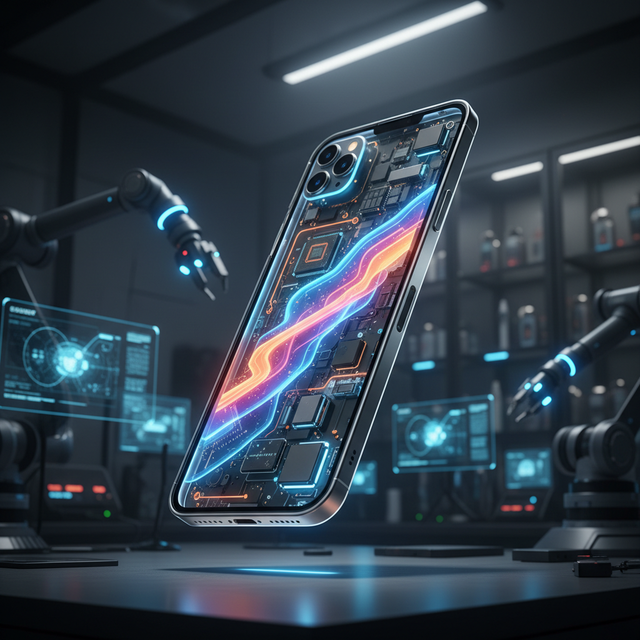
TL;DR: An "iPhone Air" would represent a significant engineering challenge, pushing the boundaries of miniaturization, material science, and thermal management. It would likely prioritize an ultra-thin, lightweight design, potentially sacrificing some battery capacity or port options for a premium, minimalist experience. Key innovations would revolve around advanced display integration, highly efficient chipsets, and refined manufacturing processes to achieve Apple's signature blend of performance and aesthetic.
Introduction
Apple's "Air" moniker has historically signified a commitment to extreme thinness and lightness without sacrificing core functionality. From the MacBook Air to the iPad Air, these devices redefine their categories. The prospect of an "iPhone Air" ignites speculation about how Apple's engineers would approach such a challenge in the already compact and feature-rich smartphone landscape. This article explores the technical considerations and potential innovations that would define an "iPhone Air."
Defining the "Air" Ethos for iPhone
The "Air" brand implies a focus on portability and minimalism. For an iPhone, this would mean pushing the limits of industrial design to create a device significantly thinner and lighter than current models. This isn't just about aesthetics; it's about re-evaluating every internal component for size, weight, and thermal efficiency. Engineers would face the fundamental trade-off: how to achieve extreme thinness without compromising battery life, camera performance, or structural integrity.
Material Science and Structural Integrity
Achieving an ultra-thin profile necessitates advanced materials. Traditional aluminum or stainless steel frames might be too heavy or bulky. We could see a greater reliance on aerospace-grade titanium alloys, which offer an exceptional strength-to-weight ratio. Furthermore, internal structural components might utilize novel composites or even redesigned PCB layouts to minimize thickness. The display glass, often a significant contributor to thickness, would need to be incredibly thin yet durable, potentially leveraging new ceramic shield technologies or even flexible glass substrates.
Miniaturization and Component Redesign
Every millimeter counts. An "iPhone Air" would demand a complete rethinking of internal component layout. This could include:
- System-on-a-Chip (SoC): While Apple's A-series chips are already highly integrated, further optimizations for thermal dissipation in a thinner chassis would be critical. This might involve new packaging techniques or even a shift in core architecture for improved power efficiency.
- Battery Technology: This is perhaps the biggest hurdle. Current lithium-ion batteries are volume-constrained. An "iPhone Air" might necessitate solid-state batteries, which offer higher energy density in a smaller footprint, or a multi-cell design optimized for thinness. Alternatively, Apple might prioritize extreme power efficiency from the SoC and display to compensate for a smaller battery.
- Camera Modules: Modern iPhone cameras rely on sophisticated multi-lens systems and sensor-shift stabilization, which add thickness. An "iPhone Air" might introduce a completely new camera architecture, perhaps a periscope-style lens for optical zoom that lays flat, or a greater reliance on computational photography to overcome physical limitations of smaller sensors or simpler lens arrays.
- Haptic Engine and Speakers: These components occupy valuable internal space. Redesigns for thinner haptic motors and speaker enclosures would be essential, potentially impacting haptic feedback quality or audio output, unless innovative solutions are found.
Display Technology and Integration
The display itself is a major component. An "iPhone Air" would likely feature an advanced OLED panel, potentially with a more integrated touch layer (on-cell or in-cell) to reduce overall display stack thickness. The bezels would need to be incredibly slim, pushing the screen-to-body ratio to new extremes. ProMotion technology for adaptive refresh rates would be expected, further enhancing user experience while managing power consumption.
Thermal Management in a Constrained Environment
Thin devices inherently have less surface area for heat dissipation. Apple's powerful SoCs generate heat, especially under load. An "iPhone Air" would require innovative thermal solutions, perhaps ultra-thin vapor chambers, advanced graphite sheets, or even a re-evaluation of performance throttling strategies to prevent overheating without compromising user experience. This is a critical engineering challenge for sustained performance.
Portability and Connectivity
The "Air" philosophy often means minimalist connectivity. While Apple has embraced USB-C, an "iPhone Air" might push further towards a portless design, relying entirely on wireless charging (MagSafe) and wireless data transfer. This would free up internal space and further reduce thickness, but would also introduce new user experience considerations and reliance on wireless infrastructure.
Software Optimization for "Air"
iOS would play a crucial role in optimizing the "iPhone Air" experience. This could involve:
- Power Management: Even more aggressive power management algorithms to extend battery life from a potentially smaller cell.
- UI/UX Enhancements: Potentially new gestures or interface elements that leverage the device's extreme lightness or unique form factor.
- Camera Software: Advanced computational photography algorithms to compensate for any physical camera limitations imposed by the thin design.
Market Positioning and Feasibility
An "iPhone Air" would likely be positioned as a premium, niche device, appealing to users who prioritize extreme portability and minimalist design above all else. The engineering challenges are immense, and the cost of developing and manufacturing such a device would likely place it at the very high end of the market. The question for Apple would be whether the market demand for an ultra-thin iPhone justifies the significant R&D investment and potential compromises in other areas.
Conclusion
The concept of an "iPhone Air" is a fascinating thought experiment in mobile engineering. It represents a confluence of cutting-edge material science, miniaturization techniques, and software optimization. While the technical hurdles are substantial, particularly concerning battery life and camera integration, Apple's history of pushing boundaries suggests that if such a device were to emerge, it would be a testament to incredible engineering prowess, redefining what's possible in a smartphone form factor. It would be a device that doesn't just look different, but fundamentally rethinks the internal architecture to achieve its "Air" designation.