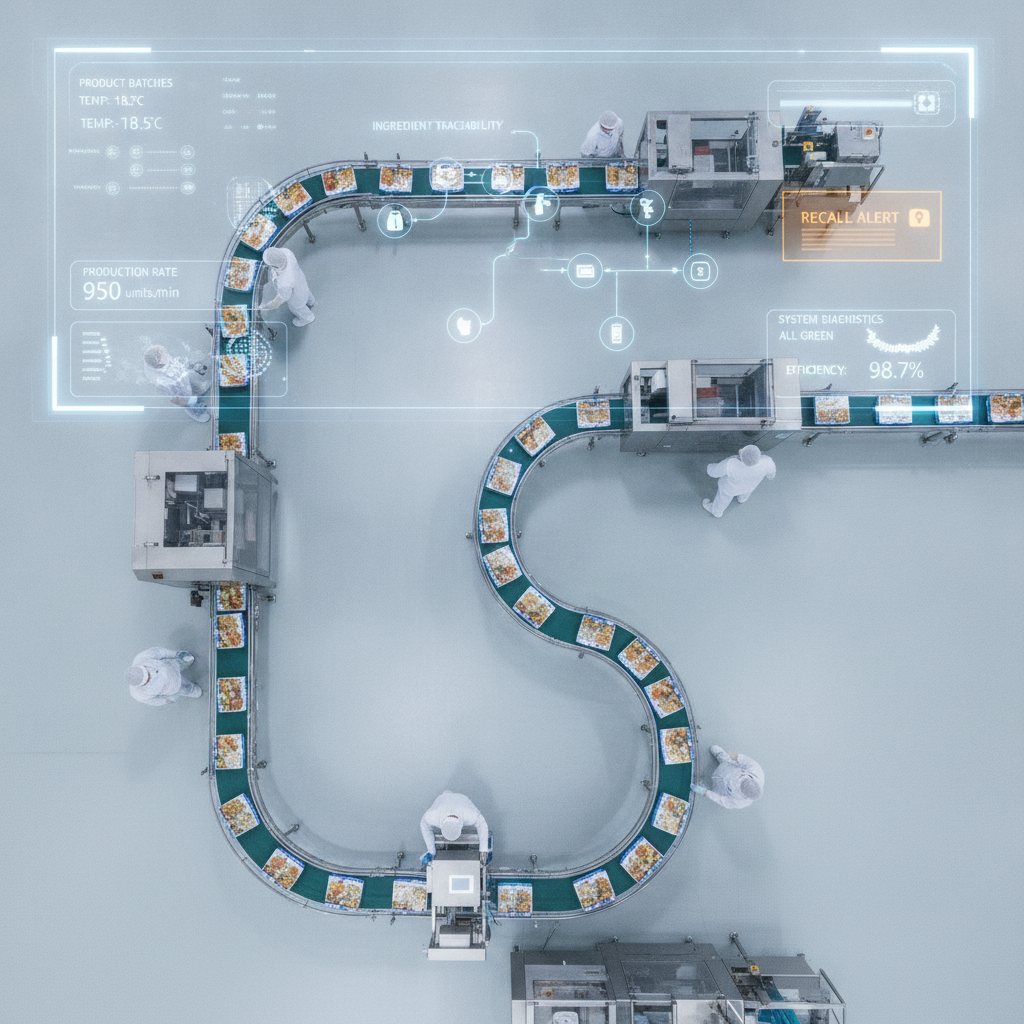
TL;DR
- Food recalls are an inevitable part of the industry; robust preparation is paramount for business survival and brand integrity.
- Generic, off-the-shelf recall solutions often lack the specific functionality and integration capabilities required for complex, perishable supply chains.
- Custom software offers unparalleled precision, speed, and auditability, which are critical for minimizing damage during a recall event.
- Proactive investment in a tailored recall management system significantly reduces potential financial losses, legal liabilities, and reputational harm.
- Designing a comprehensive, automated recall system transforms a potential crisis into a controlled, manageable operational challenge.
The Nightmare Scenario: Why Food Recalls Demand Your Attention
Imagine this: You're a founder of a promising frozen food startup. Your products are gaining traction, sales are up, and investors are interested. Then, the call comes in – a critical ingredient in one of your flagship products has been linked to a pathogen, or perhaps an undeclared allergen has been discovered. You have a recall on your hands.
Panic sets in. Where did that ingredient come from? Which batches are affected? Where are those batches now? How do you notify everyone without causing widespread alarm or, worse, missing critical points of sale? The clock is ticking, and every second lost amplifies the risk to your consumers, your brand, and your entire business.
For frozen food startups, the stakes are incredibly high. Unlike shelf-stable goods, frozen products have specific storage and handling requirements. A recall isn't just about pulling product; it's about speed, precision, and maintaining consumer trust in a highly sensitive market. This isn't just an operational hiccup; it's an existential threat. This article isn't about if a recall will happen, but when, and how custom software can be your most powerful defense.
The High Stakes of a Frozen Food Recall
A food recall isn't merely an inconvenience; it's a multi-faceted crisis with far-reaching consequences. For a startup, these impacts can be catastrophic.
Financial Impact
The direct costs are staggering. You're looking at expenses for retrieving products from distributors and retailers, shipping, storage of recalled items, and ultimately, their destruction. There are also potential legal fees, fines from regulatory bodies, and the cost of increased testing and quality assurance measures post-recall. Indirectly, you face lost sales from pulled products, potential contract terminations with retailers, and a general downturn in consumer purchasing due to negative publicity.
Reputational Damage
Trust is the bedrock of any food brand, especially for startups trying to carve out a niche. A recall, particularly one involving safety concerns, can shatter that trust overnight. Consumers are quick to share negative experiences, and social media can amplify a crisis exponentially. Rebuilding a tarnished reputation can take years, if it's even possible, and often requires significant marketing investment.
Regulatory Penalties and Compliance
Regulatory bodies like the FDA in the US, or similar agencies globally, have stringent requirements for food safety and recall procedures. Failure to comply with these regulations, or demonstrating a slow, disorganized response, can result in hefty fines, mandatory shutdowns, and even criminal charges for individuals. Maintaining meticulous records and demonstrating a clear, efficient recall process is not just good practice; it's a legal imperative.
Complexity of the Frozen Food Supply Chain
Frozen food supply chains are inherently complex. They involve numerous suppliers for ingredients, co-packers, cold storage facilities, multiple layers of distributors, and finally, diverse retail outlets. Pinpointing the exact source of contamination or error, identifying all affected batches, and tracking their distribution across this intricate web is a monumental task without the right tools. The perishable nature of frozen goods adds an extra layer of urgency, demanding swift and accurate action.
Why Off-the-Shelf Solutions Often Fall Short
Many startups, in an effort to save costs and implement solutions quickly, opt for off-the-shelf (OTS) software for supply chain management or basic inventory tracking. While these tools can be effective for routine operations, they frequently buckle under the pressure of a full-scale recall.
Generic Nature and Lack of Tailoring
OTS solutions are designed to be general purpose, serving a wide range of businesses. This means they often lack the granular detail and specific functionalities required for the unique challenges of a frozen food supply chain. Your specific product types, ingredient sourcing complexities, unique packaging configurations, or distribution networks might not be adequately supported, leading to workarounds and manual processes during a crisis.
Integration Headaches and Data Silos
Even if an OTS solution has some recall features, it rarely integrates seamlessly with all your other critical systems: your ingredient procurement, production line management, quality control, warehouse management, and sales platforms. This leads to data silos where crucial information resides in disparate systems, requiring manual data transfer and reconciliation – a recipe for errors and delays when speed is paramount.
Scalability Issues Under Pressure
During a recall, the system needs to perform under immense pressure. You might need to query thousands of records, send out hundreds of notifications, and track countless items simultaneously. Many OTS solutions, especially those not built for high-volume, real-time crisis management, can become slow, unresponsive, or even crash, exacerbating the chaos.
Inflexibility and Lack of Customization
Your recall protocols might evolve, or you might have specific regulatory requirements unique to your region or product. OTS solutions typically offer limited customization options. Adapting to new recall triggers, modifying notification workflows, or generating specific compliance reports can be difficult, expensive, or impossible, leaving critical gaps in your response capability.
The Custom Software Advantage: Precision, Speed, Control
Building a custom recall management system isn't just about having software; it's about embedding your specific operational intelligence, compliance requirements, and crisis protocols directly into your core business processes. This strategic investment provides unparalleled precision, speed, and control when it matters most.
Traceability from Farm to Fork
The cornerstone of effective recall management is robust traceability. A custom system can meticulously track every ingredient from its original supplier lot number through every stage of production, packaging, and distribution. This means:
- Batch Tracking: Every finished product batch is linked to its unique production run, date, and facility.
- Ingredient Lot Numbers: Detailed records connect specific ingredient lots to the exact product batches they were used in.
- Supplier Management: Comprehensive data on supplier certifications, audit histories, and performance, ensuring you know the origin and quality of every component.
- Production Data Integration: Real-time data from your production lines can be integrated, recording critical parameters like temperature, processing times, and quality checks for each batch.
Automated Recall Triggers and Workflows
Manual recall processes are slow and prone to human error. A custom system can automate critical steps, ensuring rapid and consistent execution:
- Pre-defined Protocols: Establish different recall severities (e.g., Class I for life-threatening, Class III for minor issues) with pre-configured workflows for each.
- Automated Notifications: Instantly alert internal teams, suppliers, distributors, retailers, and even regulatory bodies via email, SMS, or integrated messaging platforms.
- Task Management and Escalation: Automatically assign tasks to specific teams (e.g., legal, QA, logistics, communications) and set up escalation paths if tasks aren't completed within defined timeframes.
Real-time Inventory & Location Tracking
Knowing exactly where affected products are at any given moment is crucial for minimizing the scope and cost of a recall:
- Pinpointing Affected Products: Quickly identify all units of a specific batch, whether they are in your warehouse, in transit, or on retail shelves.
- Minimizing Scope: By accurately identifying affected products, you can limit the recall to only the necessary items, reducing waste and associated costs.
- Reducing Waste: Avoid recalling good product by mistake, ensuring that only compromised items are targeted for retrieval and disposition.
Centralized Communication Hub
During a crisis, clear, consistent, and timely communication is vital. A custom system can act as a single source of truth:
- Internal Collaboration: Provide a centralized platform for all internal teams to share updates, documents, and action plans.
- Controlled External Communication: Store pre-approved communication templates for different scenarios, ensuring consistent messaging to the public, media, and regulatory bodies.
- Customer Support Integration: Integrate with your customer support systems to provide agents with real-time information and scripts, ensuring a unified and empathetic response to consumer inquiries.
Auditability & Reporting
Post-recall, you'll need to demonstrate to regulators and stakeholders exactly what happened and how you responded. A custom system ensures:
- Comprehensive Logs: Every action, decision, and communication related to the recall is logged and timestamped, creating an immutable audit trail.
- Regulatory Compliance Reports: Generate detailed reports on demand, providing all necessary information for FDA, USDA, or other regulatory submissions.
- Post-Recall Analysis: Use the collected data to conduct thorough post-mortems, identify weaknesses in your supply chain or processes, and implement continuous improvements to prevent future incidents.
Architecting a Recall-Ready System: Key Components & Process
Building a robust recall management system involves several interconnected modules, each playing a critical role in ensuring end-to-end traceability and rapid response. Think of it as a digital backbone for your food safety strategy.
Core Modules of a Custom Recall System
- Ingredient & Supplier Management (ISM): Tracks every incoming ingredient lot, including supplier details, certifications, quality control data, and storage conditions. This is where the 'farm' part of 'farm-to-fork' begins.
- Production Batch Tracking (PBT): Records detailed information about each production run of your finished products. This includes raw materials used (linked to ISM), production dates, equipment used, operators, and quality checks performed.
- Distribution & Logistics Management (DLM): Logs every shipment of finished goods, detailing where each product batch went (distributor, retailer, specific store locations), shipment dates, and quantities. This module is key to knowing where your product is in the 'fork' part of the journey.
- Recall Management Module (RMM): The central hub for initiating, managing, and closing recalls. It orchestrates workflows, communications, and data aggregation from other modules.
- Reporting & Analytics (R&A): Provides dashboards and reports for real-time recall status, compliance documentation, and post-recall analysis.
Simplified Data Model for Traceability
Consider these core entities in a custom recall system:
-
ProductBatch: Represents a specific production run of a finished frozen food item.
batchId(unique identifier)productId(links to product definition)productionDateexpiryDateproductionLineIdingredientsUsed(array ofIngredientLotIDs)distributionRecords(array ofDistributionEventIDs)
-
IngredientLot: Tracks a specific lot of a raw material or component.
lotId(unique identifier)ingredientNamesupplierIdreceiptDatecertificationDatausedInBatches(array ofProductBatchIDs)
-
DistributionEvent: Records where and when a
ProductBatchwas shipped.eventIdbatchIdshipmentDatedestinationLocation(e.g., distributor warehouse ID, retail store ID)quantityShipped
-
RecallEvent: Details of an active or past recall.
recallIdstatus(e.g., "Initiated", "Active", "Completed")initiationDatereason(e.g., "Listeria contamination", "Undeclared allergen")affectedProductBatches(array ofProductBatchIDs)affectedIngredientLots(array ofIngredientLotIDs)communicationPlan(link to communication templates)responsibleTeam
Pseudo-code: Initiating a Recall
Here's a simplified look at how a function might initiate a recall in such a system:
FUNCTION initiateRecall(triggeringEvent, affectedBatchId, reason, severity)
  // 1. Create new RecallEvent record
  recall = NEW RecallEvent()
  recall.status = "Initiated"
  recall.initiationDate = NOW()
  recall.reason = reason
  recall.severity = severity
  recall.triggeringEvent = triggeringEvent // e.g., "Lab Result: Listeria"

  // 2. Identify all affected products and ingredients
  affectedProducts = findAffectedProducts(affectedBatchId) // Uses ProductBatch and IngredientLot data
  recall.affectedProductBatches = affectedProducts.batches
  recall.affectedIngredientLots = affectedProducts.ingredients

  // 3. Determine distribution impact
  affectedLocations = findDistributionLocations(recall.affectedProductBatches)
  recall.affectedDistributionPoints = affectedLocations

  // 4. Generate communication plan based on severity
  communicationPlan = generateCommunicationPlan(severity, recall.affectedDistributionPoints)
  recall.communicationPlan = communicationPlan

  // 5. Store recall event
  SAVE recall

  // 6. Trigger automated notifications
  FOR EACH stakeholder IN communicationPlan.stakeholders
    SEND_NOTIFICATION(stakeholder, communicationPlan.message)

  // 7. Update inventory status for affected products
  MARK_INVENTORY_AS_RECALLED(recall.affectedProductBatches)

  RETURN recall.recallId
END FUNCTION
Step-by-Step Process for a Hypothetical Recall
- Detection & Initiation: A quality assurance lab test flags a pathogen in a specific ingredient lot. The QA team logs this into the system, initiating a recall event through the RMM. The system immediately identifies all
ProductBatchrecords that used thisIngredientLot. - Scope & Containment: The RMM, using
ProductBatchandDistributionEventdata, instantly identifies all affected finished products, their production dates, and their current locations (e.g., specific distributor warehouses, retail stores). Automated alerts are sent to halt further distribution or sale of these specific batches. - Notification: Based on the recall's severity, the system automatically sends pre-approved notifications to internal teams, suppliers, distributors, and regulatory bodies. Communication templates are populated with recall-specific data.
- Retrieval & Segregation: The system provides detailed instructions to distributors and retailers on how to identify, segregate, and return affected products. It tracks the progress of these returns in real-time.
- Disposition: Once recalled products are returned, the system manages their disposition, whether it's destruction, rework (if safe and permissible), or further testing. All actions are logged.
- Resolution & Reporting: After all affected products are accounted for, the recall is officially closed. The RMM generates comprehensive reports for regulatory compliance and internal post-mortem analysis, identifying areas for process improvement.
The ROI of a Proactive Recall System
Investing in a custom recall management system might seem like a significant upfront cost, but the return on investment (ROI) becomes clear when you consider the alternative – a chaotic, reactive response to a crisis.
Minimizing Financial Losses
A custom system's ability to precisely identify affected products and their locations means you recall only what's necessary. This significantly reduces the volume of product to be retrieved and destroyed, saving on logistics, storage, and disposal costs. Faster resolution also means less time with products off shelves, minimizing lost sales.
Protecting Brand Equity and Consumer Trust
An efficient, transparent, and rapid recall demonstrates competence and a commitment to consumer safety. This proactive approach can help mitigate reputational damage, allowing your brand to emerge from a crisis with its integrity largely intact. Consumers are more likely to forgive an incident if they see a responsible and effective response.
Ensuring Regulatory Compliance and Avoiding Fines
With comprehensive audit trails and automated reporting, your custom system ensures you meet all regulatory obligations. This proactive compliance helps you avoid hefty fines, legal battles, and potential operational shutdowns, safeguarding your license to operate.
Operational Efficiency During a Crisis
By automating workflows and centralizing information, a custom system transforms a potential scramble into a structured, executable plan. Your teams can focus on critical decision-making rather than wrestling with disparate data or manual processes, leading to a faster, more effective resolution.
Peace of Mind for Founders
Ultimately, a robust recall system offers invaluable peace of mind. Knowing that your business is prepared for one of the most challenging scenarios in the food industry allows you to focus on growth, innovation, and product development, rather than constantly worrying about potential disasters.
Key Takeaways
Food recalls are an unfortunate reality in the industry, but they don't have to be a death sentence for your startup. Preparedness is not just a best practice; it's a competitive advantage and a fundamental aspect of risk management.
- Recalls are Inevitable: Accept this reality and build your defenses proactively.
- Custom Software Offers Unmatched Control: Generic solutions often fall short. Tailored systems provide the precision, speed, and accuracy needed during a crisis.
- Focus on Traceability and Automation: Implement end-to-end traceability from ingredient sourcing to retail distribution, coupled with automated recall workflows and communication.
- It's an Investment, Not an Expense: A robust recall system is an investment in your business continuity, brand protection, and long-term viability.
Don't wait for a crisis to expose the weaknesses in your recall strategy. Proactively building a resilient system ensures that when every second counts, you're ready. At PolarSoftBD, we specialize in helping startups design and build custom software solutions, including complex supply chain and operational platforms that provide this level of control and resilience. We understand the stakes and can help you architect a system that protects your business and your customers.